- calendar_today August 17, 2025
Google advances its artificial intelligence capabilities through the launch of its new seventh-generation Tensor Processing Unit (TPU) called Ironwood. Google’s hardware strategy has achieved a substantial leap forward through this custom-designed chip because it addresses advanced Gemini model requirements instead of just making incremental improvements.
Ironwood represents a specialized hardware solution aimed at mastering simulated reasoning tasks, which Google terms “thinking,” setting the stage for revolutionary advancements in AI. Ironwood achieves its advanced capabilities through significant enhancements in its operational performance combined with architectural design improvements.
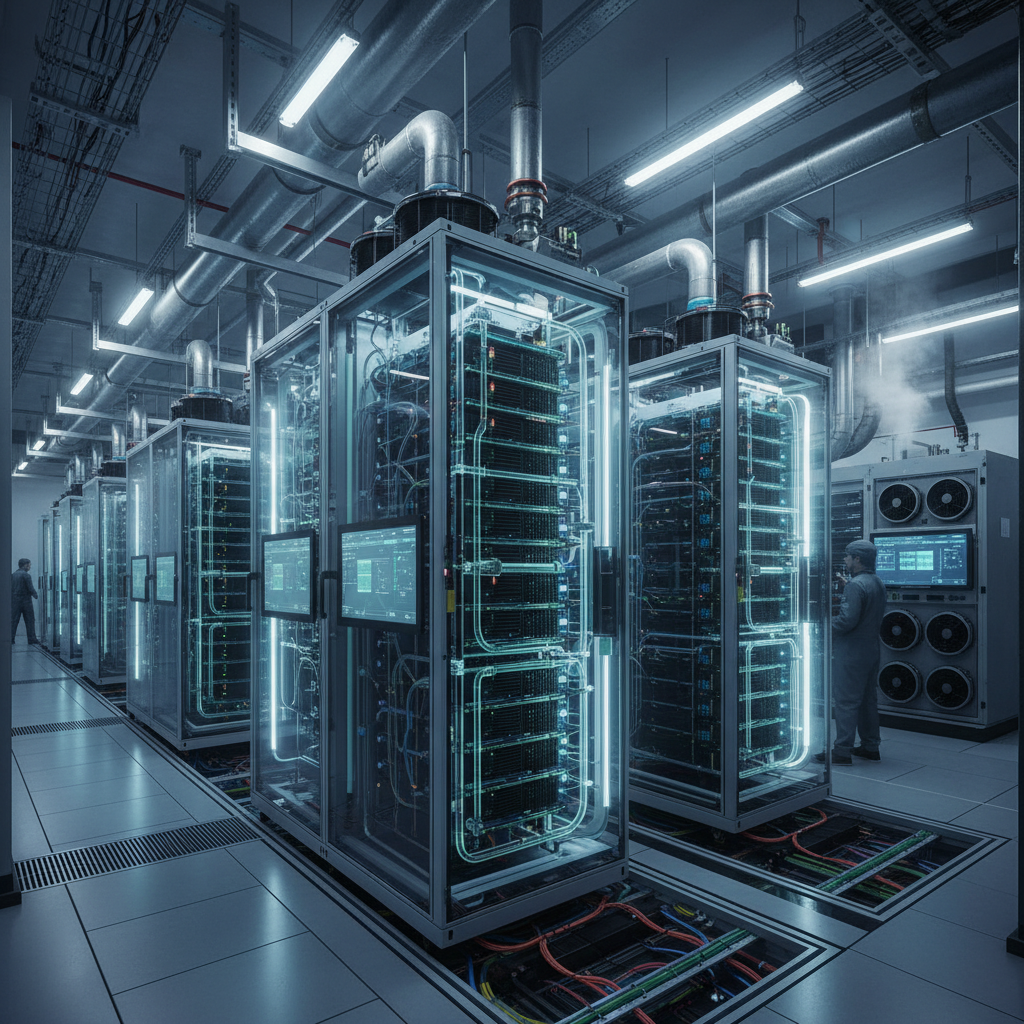
The throughput of Ironwood has been greatly increased from its TPU predecessors, while it has been engineered to function in expansive liquid-cooled cluster environments. Google has changed its strategy for developing the hardware foundation that supports its AI objectives.
Clusters of up to 9,216 chips connect through an improved Inter-Chip Interconnect (ICI) to support efficient data exchange and high-speed communication between chips. The interconnect technology enables efficient scaling of AI workloads by harnessing the extensive computational power of these clusters to solve complex problems.
The scalable architecture enables Google’s internal R&D activities and external Google Cloud developers to utilize server configurations from 256-chip units up to complete 9,216-chip clusters. When fully assembled, Ironwood pods reach their full computational capacity they delivering 42.5 Exaflops for inference tasks. The peak throughput of each Ironwood chip reaches 4,614 TFLOPs, which marks a significant advancement from earlier TPU generations.
A significantly upgraded memory architecture complements Ironwood’s enhanced processing capabilities. The 192GB high-bandwidth memory (HBM) in each chip represents six times more storage capacity than the Trillium TPU.
The considerable expansion of on-chip memory enables efficient processing of enormous AI workloads by minimizing data transfer requirements and boosting performance metrics. The system’s memory bandwidth now reaches 7.2 Tbps after improving by 4.5 times. The enhanced data transmission rate allows processing units to remain at full capacity while maximizing operational efficiency.
Google expects Ironwood’s enhanced speed and improved memory capacity, along with better power efficiency, to create a profound impact on its AI ecosystem and to enable significant advancements. Ironwood creates a solid computational base for advanced AI models, which is anticipated to produce major advancements in natural language processing, machine learning, and agentic AI development. The upcoming generation of AI technology aims to operate autonomously by collecting information, evaluating contextually relevant data, and executing tasks for users with little direct instruction.
Ironwood plays a critical role in propelling Google’s AI development forward as the company pushes the boundaries of artificial intelligence. Ironwood goes beyond basic computational strength to enable innovative artificial intelligence applications and user experiences.
Google published performance benchmarks for Ironwood with FP8 precision as the main evaluation standard. Users should apply nuanced analysis when considering the company’s claim about Ironwood “pods” being 24 times faster than similar parts of the world’s strongest supercomputers. Google recognizes that many existing supercomputing systems lack native support for FP8 precision, which affects benchmark comparisons.
The document does not contain direct performance comparisons between Ironwood and Google’s TPU v6 (Trillium). According to Google, Ironwood delivers double the energy efficiency performance per watt compared to Trillium. A Google representative explained that Ironwood took over where TPU v5p left off and Trillium continued from TPU v5e.
The highest FP8 performance capability of the Google TPU v6 (Trillium) reached about 918 TFLOPS. Modern AI hardware design places energy efficiency at the forefront due to the growing power demands of these systems.