
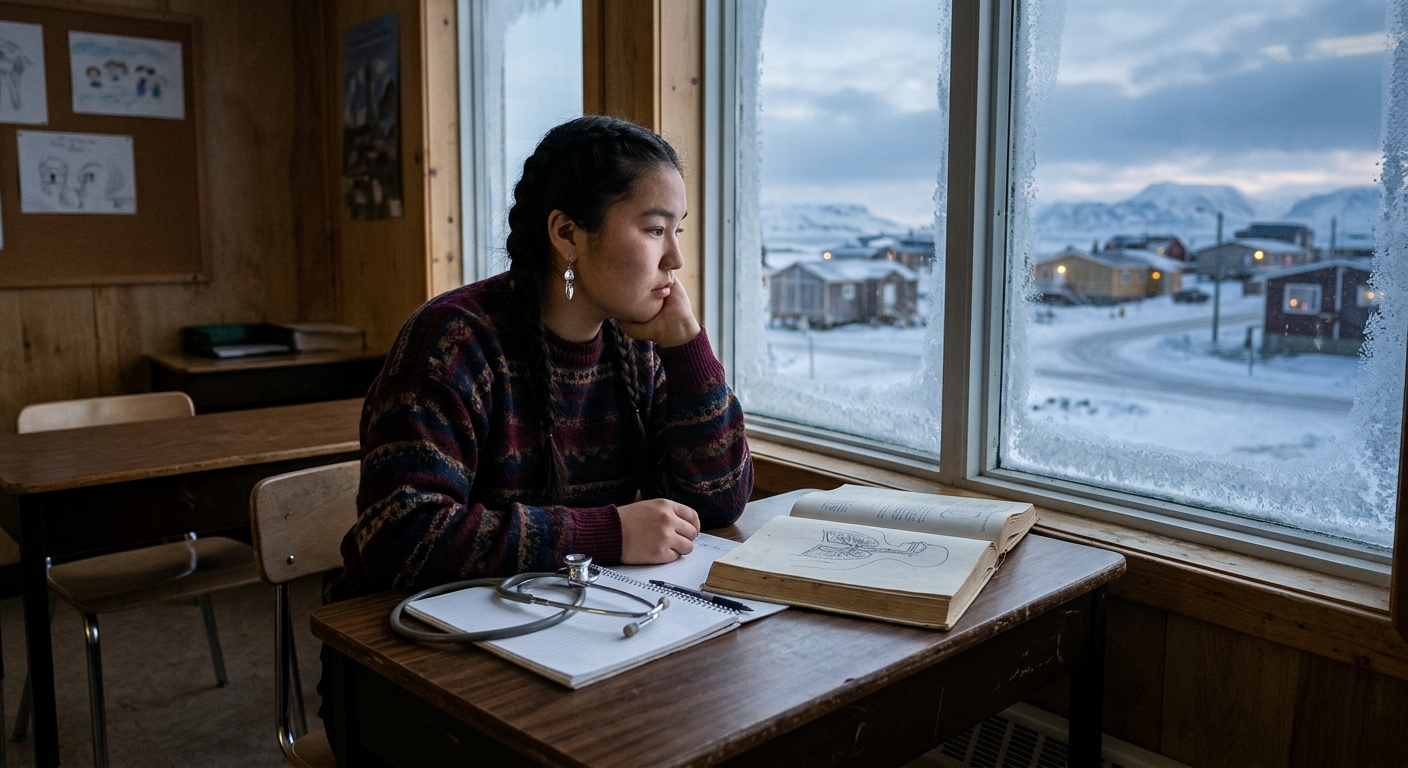
AI-generated illustration; not a photograph of the reported event.
- calendar_today November 8, 2026
Cambridge Bay Student Strives for Nursing Career
Faran Greenley, a determined high school student from Cambridge Bay, Nunavut, has set her sights on becoming a nurse. Excelling academically, Greenley achieved near-perfect grades in Grade 11, with her lowest mark being a 95 in social studies. Despite her dedication, she now faces significant obstacles on her path to her chosen career due to limited course offerings at her local high school.
Lack of Key Courses Hinders Progress
Greenley is in Grade 12 at Kiilinik High School, but she recently discovered that her school does not offer the necessary chemistry and physics courses required for admission to nursing programs in southern universities. Although she is interested in nursing programs at institutions such as the University of British Columbia or the University of Alberta, both require Grade 12 chemistry—a requirement her school cannot fulfill.
Course Availability in Nunavut Communities
The challenge Greenley faces is not unique. According to Nunavut's Department of Education, only high schools in five out of the territory's 25 communities—Iqaluit, Arviat, Gjoa Haven, Rankin Inlet, and Taloyoak—offer Grade 12 chemistry. Students in the remaining 20 communities do not have access to this critical prerequisite, severely limiting their post-secondary education options.
Impact on Students and Post-Secondary Goals
Due to these limitations, Greenley must attend a southern upgrading college after graduation to obtain the necessary prerequisites for nursing school. This extra year will involve additional time and thousands of dollars in expenses. Greenley voiced her concerns about the difficulty of this path, expressing hope that future students will not face similar barriers due to course unavailability.
Teacher Shortages Exacerbate Educational Inequity
Maya Jelali, director at Nunavut District Education Authorities, attributed the lack of available courses to a significant teacher shortage in the territory. As of the start of the current year, Nunavut had 120 vacant teacher positions, impacting the ability to offer a complete curriculum and directly affecting students' futures. Jelali highlighted that the absence of qualified teachers prevents Nunavut schools from being on par with those in southern Canada.
Government Response and Ongoing Challenges
Nudged by questions in the Legislative Assembly about Greenley's situation, Nunavut's education minister David Akeeagok acknowledged the department's efforts to recruit and retain more qualified teachers across the territory's 46 schools. However, he admitted that current challenges prevent all students from having equal access to educational resources. For students like Greenley, this means seeking education outside the territory to pursue their aspirations.
Greenley's Determination
Despite these setbacks, Greenley remains committed to her goal of becoming a nurse and hopes to return to Nunavut to serve in communities in need. She expressed her determination not to give up, stating her desire to make a difference across the territory as a future nurse.
Source: cbc.ca.


