
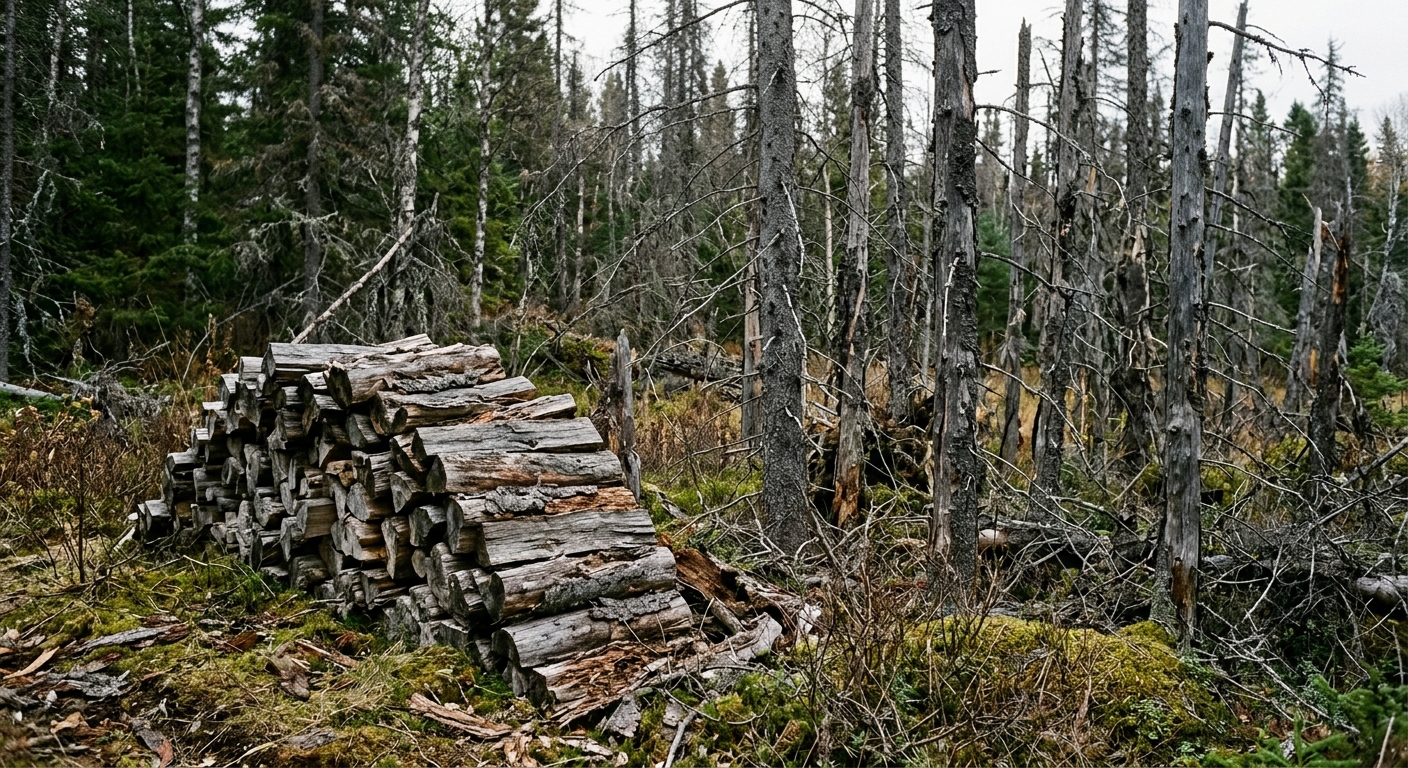
AI-generated illustration; not a photograph of the reported event.
- calendar_today November 6, 2026
Woodcutters in Haines Junction Face Growing Challenges
Firewood harvesting near Haines Junction, Yukon, has become increasingly challenging for local woodcutters. Operators report that rotting beetle-killed spruce, ongoing permit delays, and mounting operating costs are putting significant pressure on their ability to supply firewood, even as demand remains strong.
Struggles to Meet Firewood Demand
Kurt and Holly Doerfling, the owners of Black Sheep Enterprises, have noted a growing prevalence of decaying spruce trees in their harvesting areas. The region’s forests were heavily affected by a spruce beetle outbreak decades earlier, leaving behind large numbers of standing dead trees. While these beetle-killed spruce are typically valued by firewood harvesters for their natural dryness, not all of the trees remain suitable for harvesting. Doerfling describes the disappointment of attempting to harvest a promising tree, only to find it shatters due to rot.
Delays in securing harvesting permits and restrictions on when timber can be accessed add further obstacles. Black Sheep Enterprises received a permit for summer harvesting at Marshall Creek, but not until late August, leaving insufficient time to build up their fall wood stockpile. As a result, the business now cuts wood to fulfill orders as they arrive, prioritizing customers who have run out of firewood, and already maintains a waiting list.
Declining Timber Quality from Beetle-Killed Spruce
According to Peter Wright, executive director of the Yukon Wood Products Association, the availability of high-quality beetle-killed spruce is a growing concern. Much of the remaining timber near Haines Junction has been standing dead for decades and is increasingly prone to rot and collapse. Wright notes that harvesting and transporting these deteriorating resources requires more time, specialized equipment, and consequently, higher costs for operators.
Efforts to Improve Harvesting Access
The Yukon government has sought to improve access by opening new timber harvesting areas at Bear Creek II and Silver City earlier in the year, including expanded summer access. However, Doerfling reports that these changes have yet to make a substantial difference for operations such as his. Some areas, including Quill Creek, still have seasonal restrictions due to timber harvest plans and environmental regulations.
The territorial government reported in October that commercial harvest permits are now being processed approximately 35 per cent faster compared to the previous fall. The government also stated its intent to expand summer harvesting while protecting wildlife, soil health, and addressing wildfire risks. CBC News has requested additional comments from Yukon's forest management branch but did not receive a response before publication.
Cost Pressures and Firewood Prices
For now, Black Sheep Enterprises charges $500 per cord of firewood delivered to Whitehorse—the same price as the previous year. However, Doerfling points out that expenses related to fuel, equipment maintenance, labor, and logistics continue to drive costs upward. Increased access to new harvesting areas has not reduced these expenses.
Looking ahead, Doerfling is concerned that continued deterioration of beetle-killed wood may force operators to begin harvesting live trees, which would require additional time for drying and further increase operational costs and potentially firewood prices. "Just another thing that would add to cost and price," he observes.
Source: cbc.ca.


