
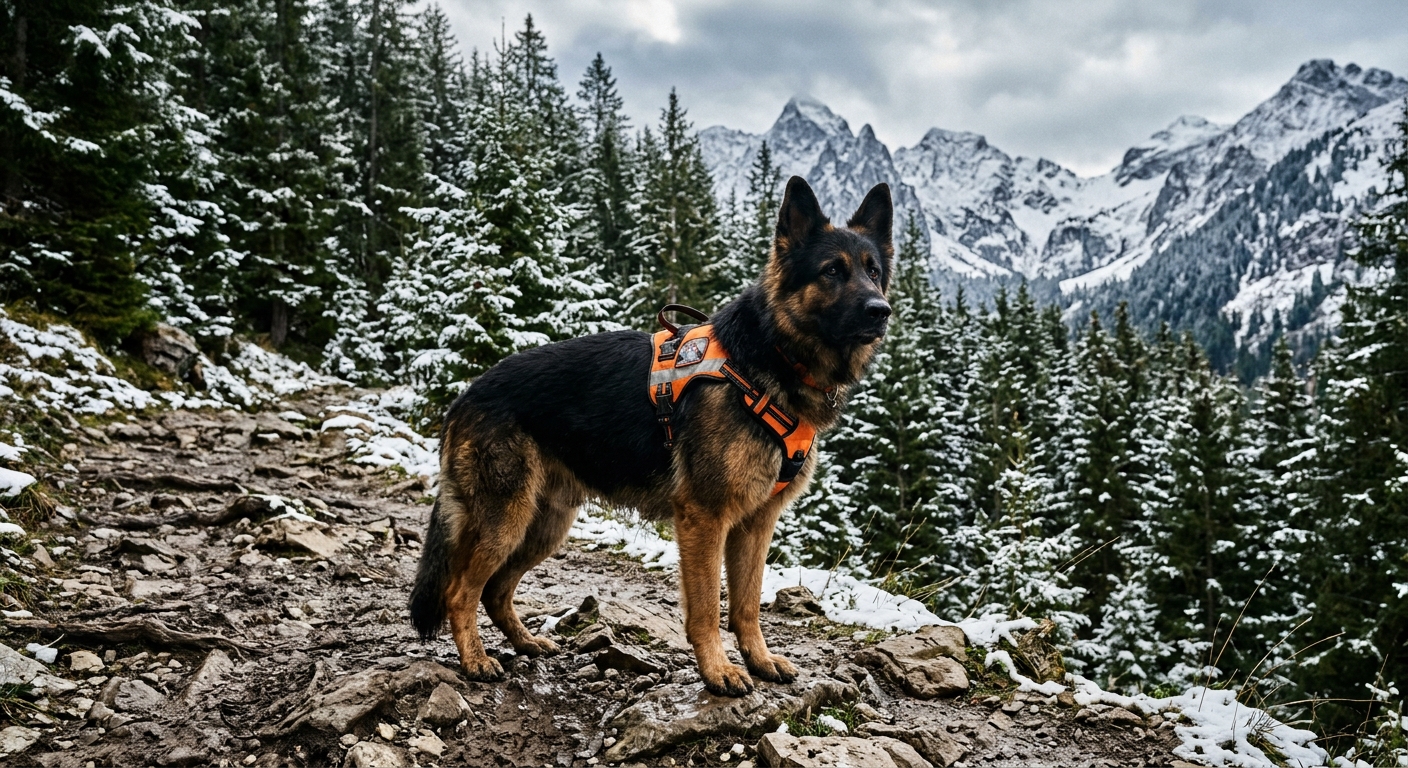
AI-generated illustration; not a photograph of the reported event.
- calendar_today October 27, 2026
Parks Canada Discontinues Historic Search and Rescue Dog Program
Parks Canada has quietly ended its search and rescue dog program, marking the closure of a service that dates back to the early 1970s. The program played a significant role in mountain national parks, with canine teams involved in backcountry rescues, missing person searches, avalanche victim recovery, and enforcement of park regulations.
Program Roots and Roles
The search and rescue program began in Jasper National Park in 1970. Over the years, it gained prominence across several mountain parks, notably Banff, Jasper, and Yoho. Canine handlers and their dogs supported local police, located fatalities, and were integral in finding individuals lost in the wilderness. They also identified illegal campsites and contributed to public safety operations.
Handlers Reflect on the Program's Impact
Scott Ward, a retired Parks Canada dog handler who worked as a warden for 35 years and a handler from 1983 to 2000, underscored the importance of the program. "It’s a really big service to visitor safety and law enforcement," he said, adding that rescues and calls have increased steadily over the years.
Mike Henderson, who served as a dog handler in Banff National Park from 2001 to 2019, voiced concern over the cut. He noted that his team, which included dogs Attila, Atar, and Cazz, responded to over 1,000 calls. Henderson said, "You’re cutting a piece that’s not obsolete. It’s got 55 years of success, and we keep on proving ourselves." Both retired handlers remarked that a new dog had just completed federal training before the program's termination.
End of an Era: Last Dog Retired
The final Parks Canada search and rescue dog, Leroy, retired last summer after seven years of service. Leroy's record included involvement in over 50 search operations, with successful outcomes in finding missing people, locating avalanche victims, and recovering mountain fatalities. Leroy also contributed to stopping poaching and served as a key public relations figure for Parks Canada.
Budget Cuts and Workforce Impacts
The discontinuation of the canine program coincides with budget reductions outlined in the 2025 federal budget, which calls for $145 million in cuts to Parks Canada over three years. A spokesperson for Parks Canada did not provide further justification for the program’s elimination before publication. In addition to ending the dog program, Parks Canada has notified 2,917 employees—over half its staff—that they could be laid off or reassigned. Andrew Campbell, acting CEO, stated that the agency intends to cut about 500 full-time positions, with voluntary retirement or departures encouraged to limit involuntary job losses. The full workforce adjustment is expected to roll out in 2027.
Program Legacy and Broader Contributions
The canine teams’ responsibilities extended beyond search and rescue. According to Henderson, the dogs dealt with illegal camping, assisted on mental health calls, responded to illegal campfires, enforced area closures, removed food intended to habituate wildlife, and monitored for poaching activity. Former warden Sid Marty recalled their vital role in avalanche rescues, enabling quick location of victims and reducing risks for Parks Canada staff. Ward also highlighted the dogs’ remarkable scent detection abilities, searching for anything from small objects to missing persons in the vast backcountry.
Handlers Call for Greater Dialogue
Both Henderson and Ward expressed disappointment at the lack of consultation before the program was cut. Henderson questioned, "Why'd we get rid of it now? It definitely needs to be spoken to," emphasizing the ongoing need for the unique services provided by canine search teams.
Source: cbc.ca.


