
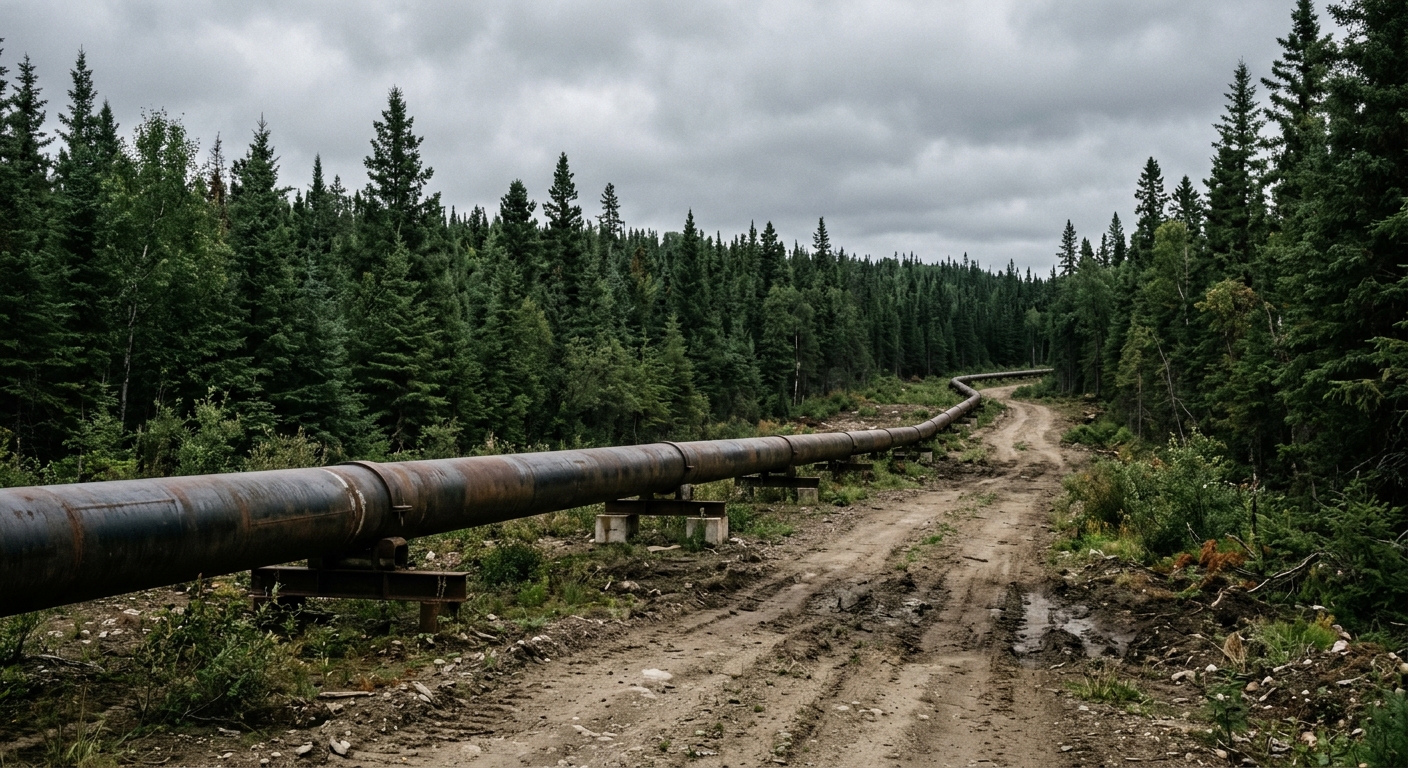
AI-generated illustration; not a photograph of the reported event.
- calendar_today October 8, 2026
Legal Action Launched by Cold Lake First Nations
Cold Lake First Nations has initiated a judicial review in Federal Court, contesting Ottawa's recent decision to designate the Pacific Link pipeline as a project of national interest. This pipeline, slated to connect Alberta to British Columbia, has become the focus of legal and political scrutiny following its fast-tracked approval under the Building Canada Act.
Background on the Pacific Link Pipeline and National Interest Designation
The Pacific Link pipeline project was announced to be expedited by Prime Minister Mark Carney and Alberta Premier Danielle Smith last week. The federal designation under the Building Canada Act aims to ensure that necessary reviews and consultations are completed within a year, targeting construction to begin in September of the following year. The pipeline would traverse strategic territories, impacting not only industry but also Indigenous communities connected to these lands.
Concerns Over Consultation and Treaty Rights
Chief Kelsey Jacko of Cold Lake First Nations has publicly expressed concerns over the process, stating that his community, located in the oilsands region, was excluded from meaningful consultations regarding the pipeline designation. The legal application highlights that the federal government's decision violates Canadian law and conflicts with the honour of the Crown, especially in relation to the promises made in Treaty No. 6.
"Increasing oilsands production will have significant adverse effects on the ability of CLFN members to maintain their Luechogh Tue Denesuline way of life as promised by Treaty No. 6," the application asserts. Furthermore, the filing notes, "Canada has made no effort to understand or mitigate the massive cumulative effects of oilsands development on CLFN's Luechogn Tue Denesuline treaty rights."
Specific Requests in the Judicial Review
Through the judicial review, Cold Lake First Nations is asking the court to overturn the national interest designation and affirm that the federal government has a duty to consult the First Nation on such major pipeline projects. The community’s legal team argues that the current designation process disregards their treaty rights and the need for meaningful engagement.
Reactions from Indigenous Organizations
The Assembly of First Nations (AFN) has also voiced concerns, indicating that they observed "many red flags" during the pipeline's national interest designation process. According to statements made to The Canadian Press, the AFN believes the federal government may be predisposed to endorsing projects before proper consultations with Indigenous communities.
Federal Commitments and International Obligations
Prime Minister Carney has previously committed that his government’s approach to major infrastructure projects would not undermine Canada’s responsibilities under the United Nations Declaration on the Rights of Indigenous Peoples. Despite this, Indigenous leaders are calling for a process that respects both legal and treaty obligations, particularly in regions affected by expanding oilsands production.
Source: cbc.ca.


