- calendar_today August 7, 2025
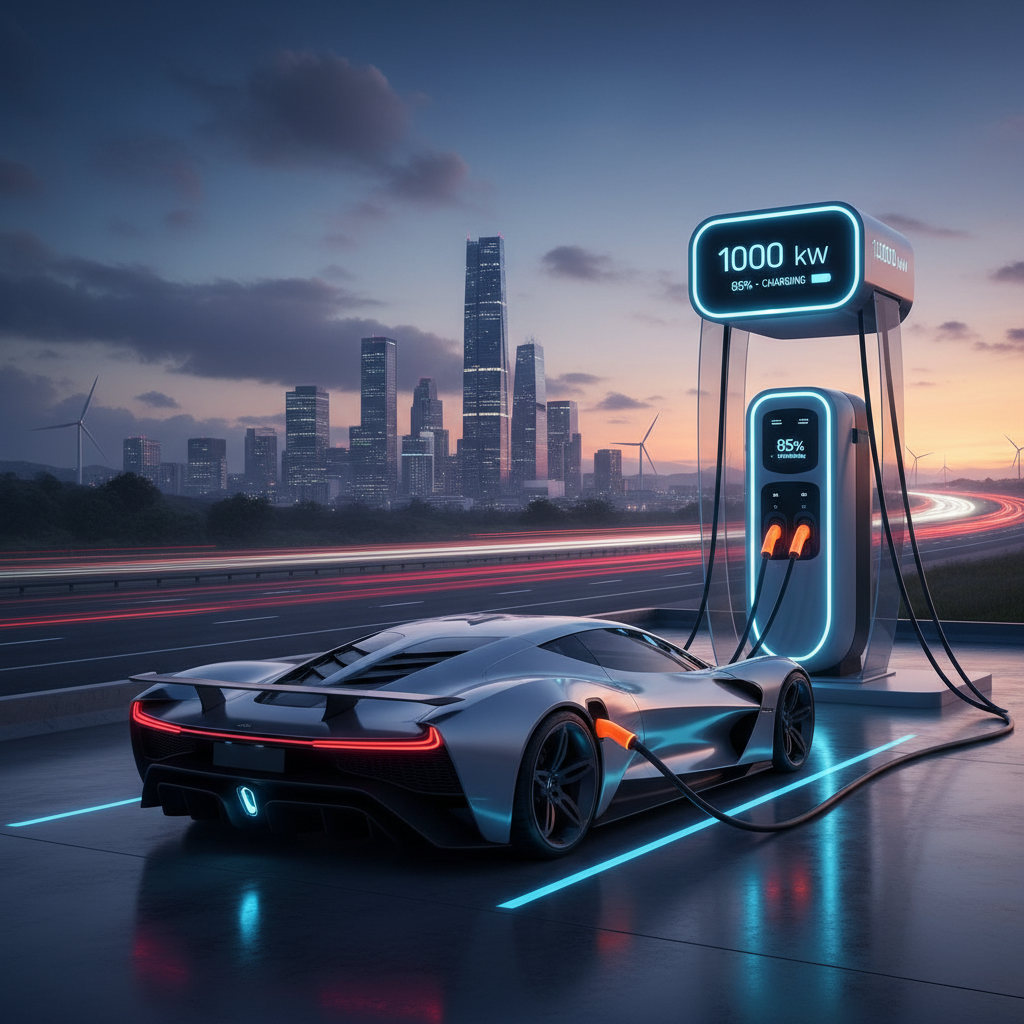
BYD which recently exceeded Tesla in global EV sales demonstrates their groundbreaking “super e-platform” marking a transformative change in electric vehicle (EV) technology. The groundbreaking system with 10C charging capability and 1,000 kW DC chargers targets a significant reduction in EV charging time to match the convenience of refueling traditional gasoline cars. The company’s fundamental technological breakthrough enables vehicles to gain an impressive 249 miles (400 km) of range within just five minutes which significantly surpasses existing industry benchmarks. Tesla Superchargers reach a maximum power of 250 kW while Electrify America stations deliver up to 350 kW and Formula E’s fastest chargers deliver up to 600 kW.
China’s Electric Surge: BYD’s Megawatt Chargers Redefine EV Speed
BYD chairperson Wang Chuanfu declared the company aims to make EV charging time equivalent to gasoline refueling duration. The “super e-platform” technology enables batteries to reach full charge in 6 minutes when charging at 10C under perfect conditions. The combination of 1,000 kW DC chargers with this new technology allows fast energy exchange which greatly shortens charging durations. BYD intends to roll out more than 4,000 megawatt chargers throughout China to provide support for their recently released electric vehicles Han L sedan and Tang L SUV.
The global market dynamics create a complicated landscape. BYD continues to expand its market reach worldwide especially in Europe but faces substantial political barriers when attempting to enter the US market. Bipartisan Congressional members have voiced concerns about national security and competitive economic threats which have resulted in initiatives to block Chinese EV manufacturers from entering the US market. Recognizing the differences between range estimation standards is essential. BYD reports a 249-mile range based on the CLTC standard used in China which provides higher estimates than those from the EPA standard applied in the United States. EPA testing would probably result in a lower actual driving range.
U.S. automakers can practically secure BYD’s revolutionary technology through licensing rights despite facing certain problems. American car manufacturers who enter into licensing agreements can speed up the adoption of faster charging standards to navigate political challenges and provide wider consumer access to rapid charging technologies. Battery temperature along with state of charge and charging infrastructure quality determine the practical efficiency of this technology. The efficiency of a vehicle measured in kilometers per kilowatt-hour (km/kWh) determines its effectiveness in transforming electric energy into usable driving range.
BYD developed the “super e-platform” as a significant step forward in EV charging technology to address the main obstacle to electric vehicle adoption which is lengthy charging periods. Through its efforts to construct a widespread charging network throughout China the company enhances its global EV market leadership while preparing to transform electric transportation’s future. Through ongoing technology improvements and infrastructure growth BYD is creating a future where electric vehicle charging will match gasoline vehicle refueling speed and convenience.
The adoption of rapid-charging technology across the industry would drive automakers to compete by enhancing their EV offerings through innovation. The ongoing competition in technology advancements promises to deliver batteries with better efficiency together with extended vehicle ranges and more accessible fast-charging stations across the globe. The adoption of faster EV charging solutions from companies like BYD by nations striving to lower carbon emissions will deliver consumer benefits while supporting a sustainable transportation system. Through licensing agreements, electric vehicles become more appealing and practical which drives a worldwide transition toward sustainable travel options.