
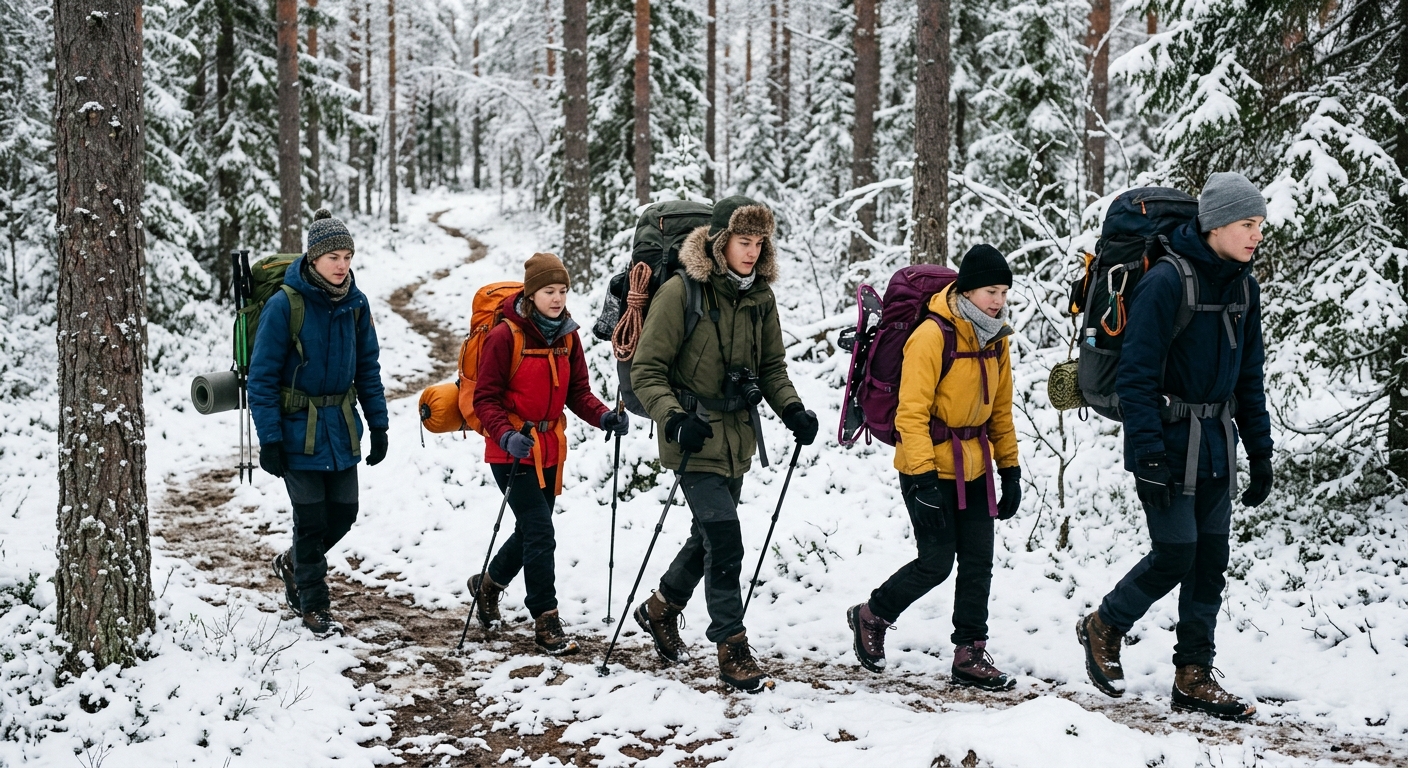
AI-generated illustration; not a photograph of the reported event.
- calendar_today October 12, 2026
Fisher River Cree Nation Students Take Learning Outdoors
Eight students from Fisher River Cree Nation recently participated in a land-based education initiative, traveling from Manitoba's Interlake region to Moose Mountain Provincial Park in Saskatchewan. This five-day moose hunt, led by Fisher River High School, focused on experiential, cultural, and spiritual development, emphasizing more than just academic achievement.
Harvesting Moose: A Journey Rooted in First Nations Culture
On October 5, the students embarked on a nearly 400-kilometre journey as part of their school's land-based education program. Among them was 18-year-old Aidan Traverse, experiencing his first big-game hunt. The group harvested four bull moose, returning to Fisher River Cree Nation with over 500 kilograms of fresh moose meat. Traverse expressed pride in bringing food for his family and community, highlighting the cultural importance of sharing and honoring elders.
Preparing for the Adventure: Building Outdoor Skills
Before departure, students worked with Ashton Amos, a Fisher River outfitter and assistant in the education program, to pack essential gear. Supplies included prospector tents, large coolers, propane tanks, and fuel, necessary for the week-long camp. This cooperation not only facilitated the hunt but also taught practical outdoor skills integral to traditional teachings.
Educational Shifts: Prioritizing Land-Based Learning
Outdoor and land-based education has deep roots in Fisher River. In 2024, the band council passed a resolution prioritizing these teachings within local schools. Nora Murdock, education director for Fisher River Cree Nation, explained that elders and knowledge keepers are now required to visit classrooms at least three times a month. Lessons combine First Nations ceremonies and Cree language instruction, reinforcing cultural identity and spiritual health among students.
High school participants in the land-based program earn credits while learning to hunt, fish, pick medicinal plants, build shelters, and practice firearms safety. Murdock believes these experiences help youth connect to their heritage, improve emotional well-being, and foster a sense of belonging.
The Impact: Community, Identity, and Spiritual Health
For students like Traverse, being out on the land offers relief from classroom anxiety and strengthens their connection to community and ancestry. The previous year, guided hunts culminated in a community feast for over 300 people, where the youth were celebrated for their skills and contributions. Amos, who assists with the outings, observed increased confidence and positivity in the students after such experiences.
Fisher River Cree Nation Elder Stan McKay emphasized that such land-based programs teach ethical hunting and community sharing—skills not typically found in the standard curriculum. He sees these initiatives as essential to maintaining first nations culture and fostering a holistic sense of education rooted in the land, spiritual health, and traditional teachings.
Broader Significance of Indigenous Education Initiatives
The annual moose hunt, part of Fisher River High School's land-based program, exemplifies how Indigenous education can center culture, identity, outdoor skills, and intergenerational learning. By prioritizing community sharing and traditional knowledge, Fisher River Cree Nation aims to help its youth achieve not just academic success, but well-being in mind, body, and spirit.
Source: cbc.ca.


