- calendar_today August 27, 2025
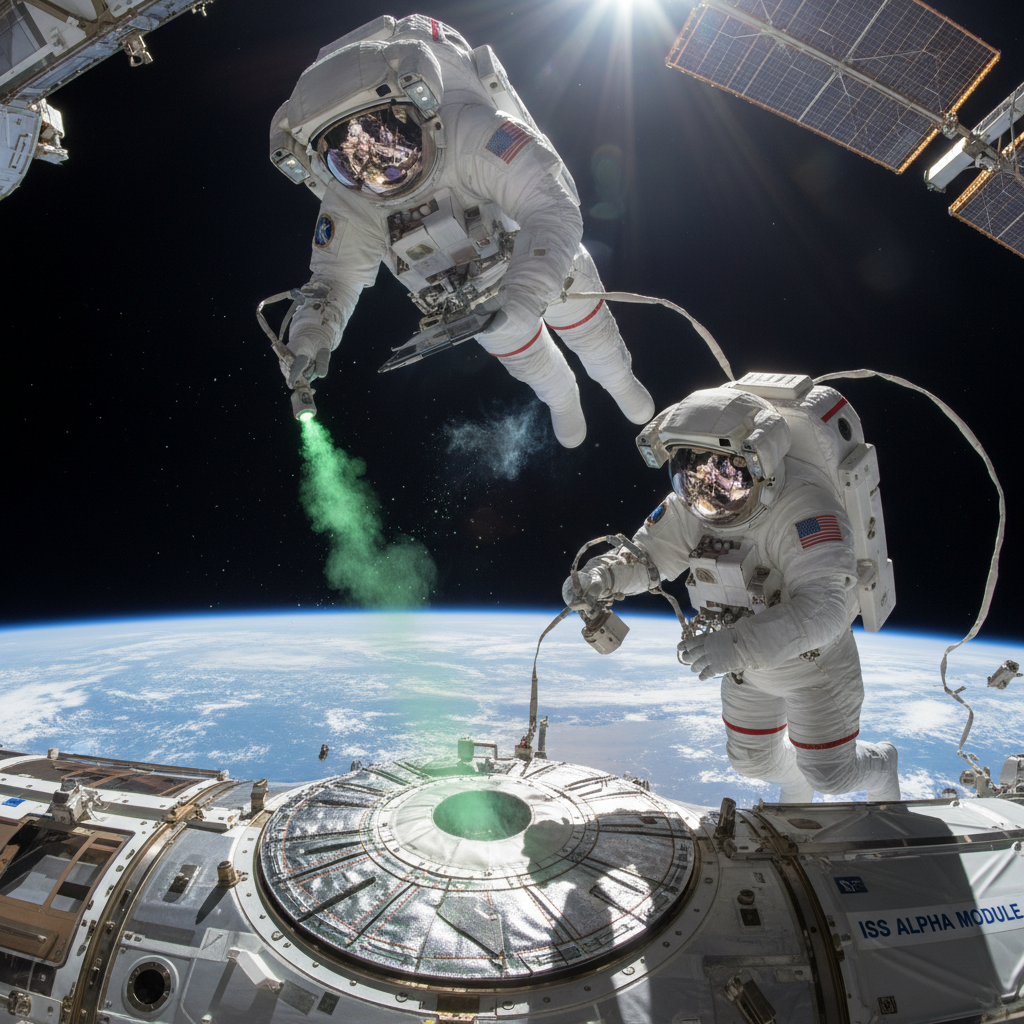
NASA needs to delay the Axiom Mission 4 launch because of a new air leak on the International Space Station (ISS). The planned commercial mission to transport four astronauts to the International Space Station has been delayed because NASA and Roscosmos need additional time to assess the current situation. NASA confirmed the launch delay but did not provide the public with many specific details. A leak represents a critical problem for the ISS because its hardware has been in orbit for nearly three decades.
The International Space Station has previously encountered air leaks before this incident. Since 2019 the International Space Station has faced gradual pressure loss. The transfer tunnel of the Russian Zvezda service module has been known as the main leak source since it’s one of the International Space Station’s oldest components. The PrK section serves as the connection between the Zvezda module and the docking port where Soyuz crew capsules and Progress resupply vehicles regularly dock. Russian cosmonauts have conducted multiple repair operations to seal the small cracks found in this area throughout the years. The air loss rate was reduced to a couple of pounds per day with these repair attempts but the problem was not entirely fixed. The best solution developed was to maintain the PrK module hatch closed except when docking is required.
Roscosmos disclosed last month that they finished repairs on the PrK module and completely sealed the section while NASA verified this with reports showing halted leak rates in that module. At first glance it appeared to represent a significant advancement. However, things quickly became confusing. Even after fixing the PrK leak the International Space Station continued to experience falling air pressure levels. Two sources verified the station’s ongoing pressure loss but failed to determine the exact cause.
Experts currently believe that the problem may stem from the hatch seals that lead into the PrK module. The PrK interior may be sealed but the hatch seals could still permit air from other parts of the station to flow into the PrK. The module’s pressure would stabilize even though the ISS continues to experience a decrease in overall pressure. The persistent mystery of the problem has led NASA to adopt a careful strategy. A high-level industry source informed Ars Technica about NASA leadership’s concerns regarding the current situation and its potential effects on the ISS’s structural integrity.
NASA postponed the Axiom Mission 4 launch from its previously set date of Thursday. In a brief statement, the agency said: NASA and Roscosmos now have more time to assess the current situation and decide if further troubleshooting actions need to be executed because of the Axiom Mission 4 postponement.
There’s another layer of concern: The recurring leaks indicate that high cycle fatigue may be affecting the structure. The ISS structure encounters this problem in aluminum metals when repeated stress exposure over time occurs. A metal clothes hanger will break if you bend it repeatedly back and forth. This same principle applies to spacecraft. Metal fatigue can cause unexpected catastrophic failures as demonstrated by the 1988 Aloha Airlines disaster where repeated stress caused the fuselage to tear apart while in flight.
NASA’s internal 5-by-5 risk matrix assigns structural cracking on the ISS the highest concern level because of its potential consequences. The crew does not face immediate danger but the future consequences cause serious concern.
NASA has refrained from issuing additional updates and has not arranged a press conference to discuss the matter further. In response to media inquiries, the agency has reiterated a single point: The station’s crew performs regular operations without incident.
Still, the silence leaves many questions unanswered. The recent leak demonstrates how difficult it is to maintain an aging International Space Station laboratory that operates under space’s harsh conditions. Engineers investigate the issue in secret while people across the globe anticipate both understanding and an enduring fix.