- calendar_today August 14, 2025
Frontier Connectivity Meets High-Performance Computing
In the vast sweep of Yukon, the Northwest Territories, and Nunavut, digital infrastructure often starts where the road ends. LEO satellites and microwave links supply the bandwidth, but the real heavy lifting—climate models, mineral surveys, tele-medicine image recognition—depends on powerful GPUs thousands of kilometres away.
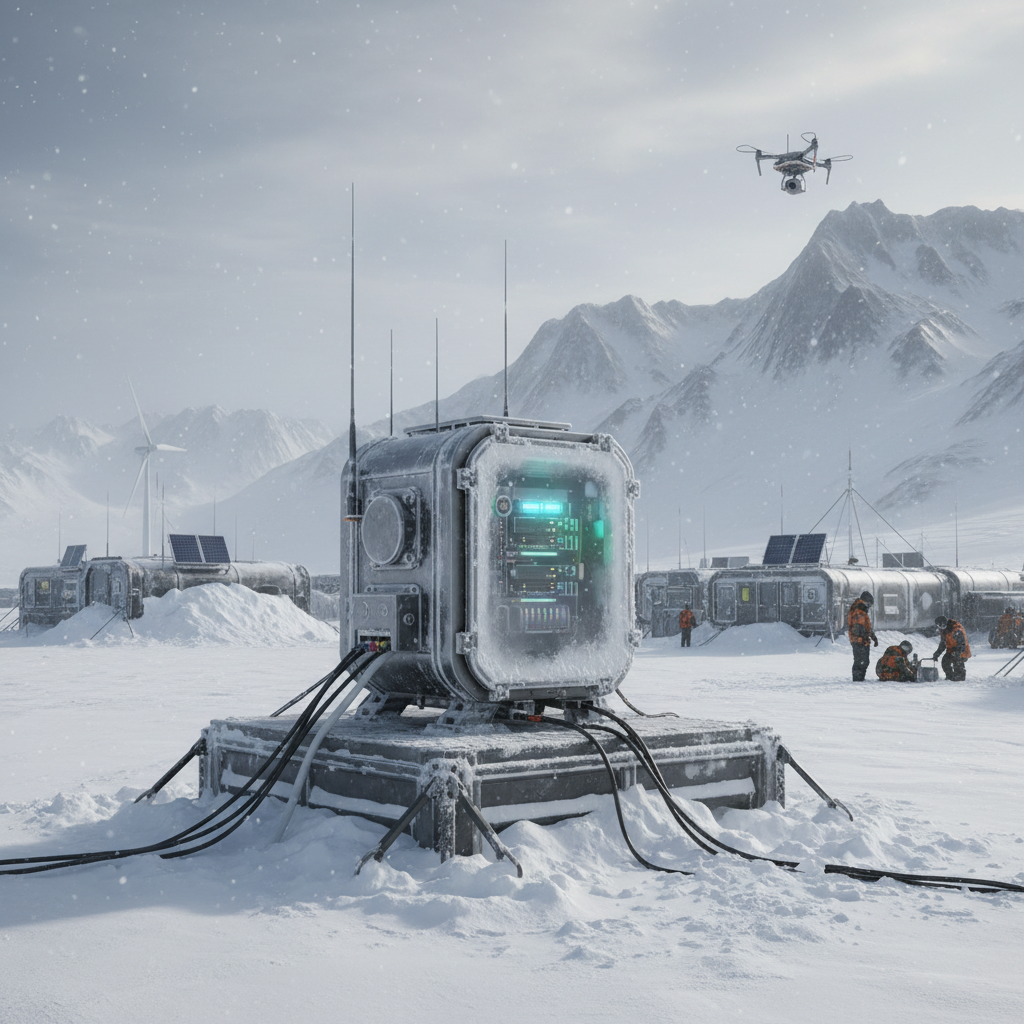
That is changing. Regional innovation centres in Whitehorse and Yellowknife have begun hosting compact Nvidia DGX “edge pods,” allowing data to be processed locally before sync-offs to southern clouds. The payoff is lower latency for mission-critical tasks and fewer expensive satellite uploads.
“We can’t wait for fibre to reach every settlement,” said Caleb Peterson, a network engineer contracted by the Yukon government. “With Nvidia, we move compute north instead of shipping data south.”
Mining Operations Push for Real-Time AI Underground
Mining is Northern Canada’s economic backbone, and companies are racing to fit AI into drill sites that operate in temperatures plunging below –40 °C. At Agnico Eagle’s Meliadine gold mine near Rankin Inlet, an Nvidia Jetson-based vision system inspects conveyor belts for ore grade variations, trimming waste rock on the fly.
Remote predictive-maintenance models run on ruggedized Nvidia GPUs, alerting technicians in Iqaluit long before equipment fails. Every hour of uptime saved is tens of thousands in revenue—and fewer dangerous helicopter trips for emergency repairs.
A geologist with a diamond producer in the Northwest Territories summed it up: “Our drill cores fly out once a week. Data can’t wait that long.”
Climate Science Heads to the Permafrost
Northern researchers confront melting permafrost, shifting caribou routes, and freak heat waves—all demanding granular, real-time data analysis. The Canadian High Arctic Research Station in Cambridge Bay now operates a hybrid cluster of Nvidia A100 cards to crunch satellite and sensor feeds. Machine-learning outputs feed straight into infrastructure planning: where to reinforce an ice road, when to reroute fuel shipments, how to position fibre pylons before the ground thaws again.
A climatologist on site noted that traditional CPUs took days to process a season’s melt pattern; the Nvidia rig does it overnight, aligning forecasts with the next cargo flight.
Telehealth Lifelines for Inuit and First Nations Communities
Sparse population, extreme weather, and few specialists make healthcare delivery a perennial challenge. Nunavut’s Department of Health is piloting Nvidia-accelerated diagnostic models that flag diabetic retinopathy from retinal images captured by nurses in hamlets like Pond Inlet. The AI triages urgent cases, sending only top-priority scans to ophthalmologists in Ottawa, reducing backlog and travel costs.
In Dawson City, an Indigenous-run mental-health hotline uses Nvidia TensorRT to transcribe and sentiment-analyze Inuktitut and Gwich’in audio streams in near real time, routing critical calls to counsellors fluent in the caller’s language.
“These systems won’t replace human care,” said Dr. Alaya Sinuupa, who leads the pilot. “But they finally give us response times measured in minutes, not charter flights.”
Logistical Headwinds: Power, Bandwidth, and Talent
AI’s promise collides with Northern realities. Diesel generates most local electricity at triple the national rate; GPUs draw serious watts. Some projects now piggyback on hybrid solar-battery microgrids near communities like Old Crow, but large-scale expansion waits on cheaper renewables.
Bandwidth is another cap. LEO satellite constellations have slashed latency, yet upload limits force data triage: raw sensor feeds stay local; only model deltas head south. Nvidia’s edge kits mitigate the choke point, but scale remains modest.
Talent shortage is perhaps toughest. Graduates from Yukon University’s new data-science program often leave for Vancouver or Edmonton. A Yellowknife startup offered equity and housing allowances to attract two Nvidia-certified ML engineers; both chose remote roles with U.S. firms instead.
Policy Signals and Arctic Sovereignty
Ottawa’s new Northern Critical Technology Fund earmarks $50 million for GPU-based research into ice-navigation safety and Indigenous language processing. The program mandates data residency within territorial borders—prompting discussions about a sovereign Arctic AI cloud leveraging Nvidia’s smaller, power-efficient Grace Hopper servers.
Territorial governments see strategic upside: better search-and-rescue predictions, automated wildlife counts, and sovereign control over data in geopolitically sensitive waters. Yet without sustained infrastructure investment, these ambitions risk stalling at the pilot stage.
One policy analyst in Whitehorse put it bluntly: “If Nvidia stock breaks $200 next year—and AI demand follows—we’ll either ride the wave or watch it from the shore ice.”