- calendar_today August 7, 2025
A Region Defined by Distance and Potential
Northern Canada—a vast expanse comprising Yukon, Northwest Territories, and Nunavut—presents unique challenges and opportunities in the clean energy transition. With communities scattered across permafrost terrain and accessible only by air or ice roads, the region’s remoteness has long contributed to its heavy reliance on diesel fuel for power and heating. However, that dependency is now undergoing a slow but determined shift.
The transition to clean energy in the North is not just about reducing emissions—it’s about sovereignty, resilience, and reducing the staggering cost of fuel deliveries. Local governments, Indigenous leaders, and clean tech innovators are now working together to explore more reliable and environmentally responsible alternatives.
Off-Grid Realities Drive Localized Solutions
Most of Northern Canada operates off-grid. Diesel generators still power schools, homes, and health centers in remote hamlets. According to recent government data, over 70% of communities in Nunavut and parts of the Northwest Territories rely solely on diesel.
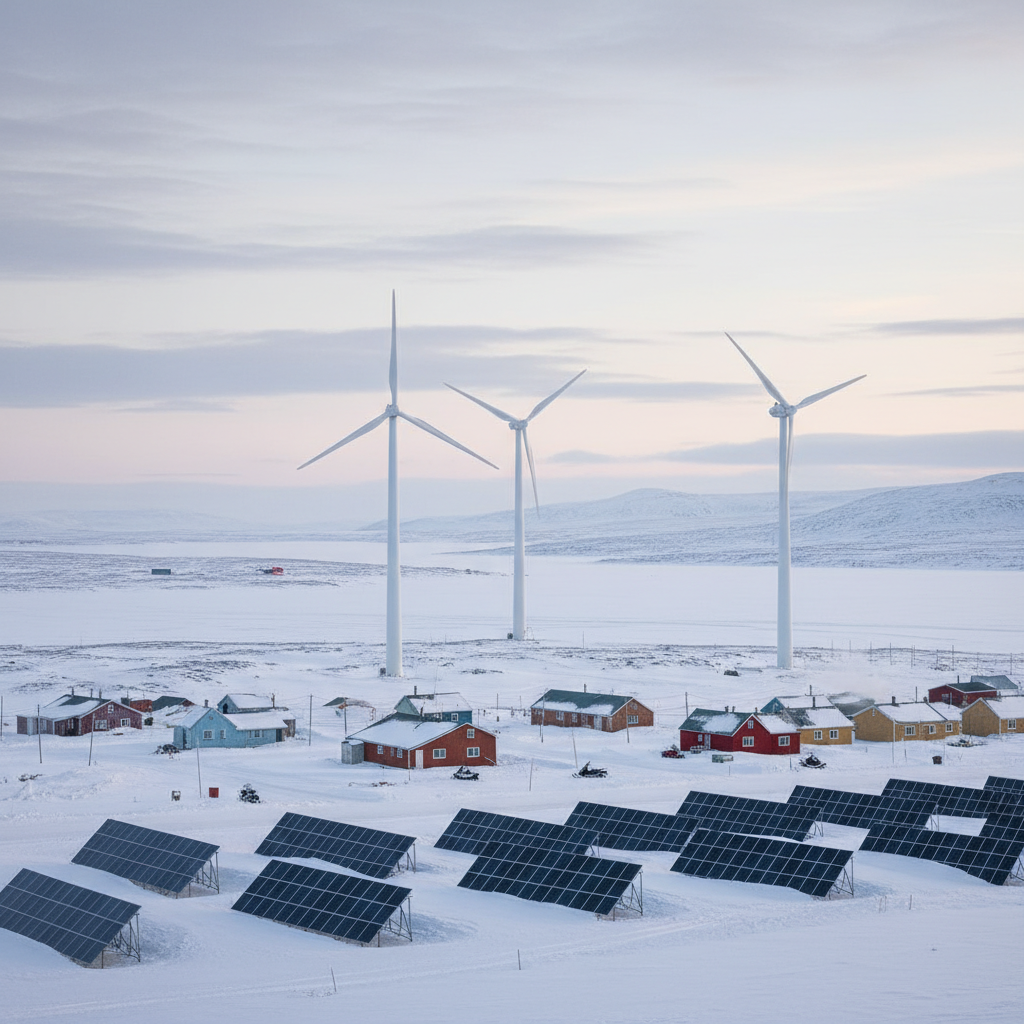
Given this context, the clean energy transition in Northern Canada is distinct from urban provinces. Instead of massive provincial power grids, microgrids and hybrid systems tailored for sub-zero conditions are being tested. Solar installations, battery storage, and wind energy are being gradually integrated, often supported by federal funding and territorial partnerships.
In Yukon, for instance, the government has partnered with local First Nations to incorporate solar power into community buildings. These solar retrofits reduce the burden on diesel and improve energy independence, especially during shoulder seasons when air deliveries are costly or impossible.
Indigenous-Led Projects and Energy Sovereignty
Indigenous communities in Northern Canada are not just stakeholders—they are emerging leaders in energy planning. In places like Colville Lake (Northwest Territories), Indigenous-owned microgrids are setting a precedent. Colville Lake’s solar-diesel-battery hybrid system, which came online in 2016, continues to serve as a proof of concept for remote clean energy solutions.
This shift toward Indigenous ownership is reshaping the narrative. Rather than being passive recipients of infrastructure, Indigenous organizations are shaping their energy futures, securing both environmental and economic benefits. Training programs are also expanding in partnership with territorial colleges to ensure long-term maintenance and local expertise.
Funding and Infrastructure Gaps Remain
Despite promising projects, Northern Canada faces persistent challenges. The upfront cost of installing renewable infrastructure in remote locations is significantly higher than in southern provinces. Transporting solar panels or wind turbines over frozen terrain or by air requires logistical precision—and major capital investment.
Furthermore, extreme weather and prolonged darkness during winter months limit the efficiency of solar energy in many areas. While battery storage helps bridge some gaps, technology suited to arctic conditions remains in development.
Government support remains a lifeline. Programs such as Natural Resources Canada’s Clean Energy for Rural and Remote Communities initiative have provided millions in grants, but experts caution that sustained investment is needed to achieve long-term transformation.
Climate Change as Both Threat and Catalyst
Ironically, climate change—accelerating faster in the Arctic than almost anywhere else on Earth—is one of the main forces driving the urgency behind Northern Canada’s energy transition. Melting permafrost, changing wildlife patterns, and rising transportation costs due to unstable ice roads are altering life across the North.
As a result, clean energy isn’t just seen through the lens of emissions reductions—it’s increasingly framed as a necessary adaptation. Community-based energy systems that are stable, renewable, and locally maintained offer an important buffer against the vulnerabilities amplified by climate change.
A Slow but Critical Transformation
The road ahead for clean energy in Northern Canada is steep and complex, but not impassable. While southern provinces move toward electrification at scale, the North is forging a parallel path—one focused on independence, resilience, and cultural alignment.
With continued investment, Indigenous leadership, and technology tailored for arctic conditions, Northern Canada could become a powerful case study in sustainable energy for extreme environments.