
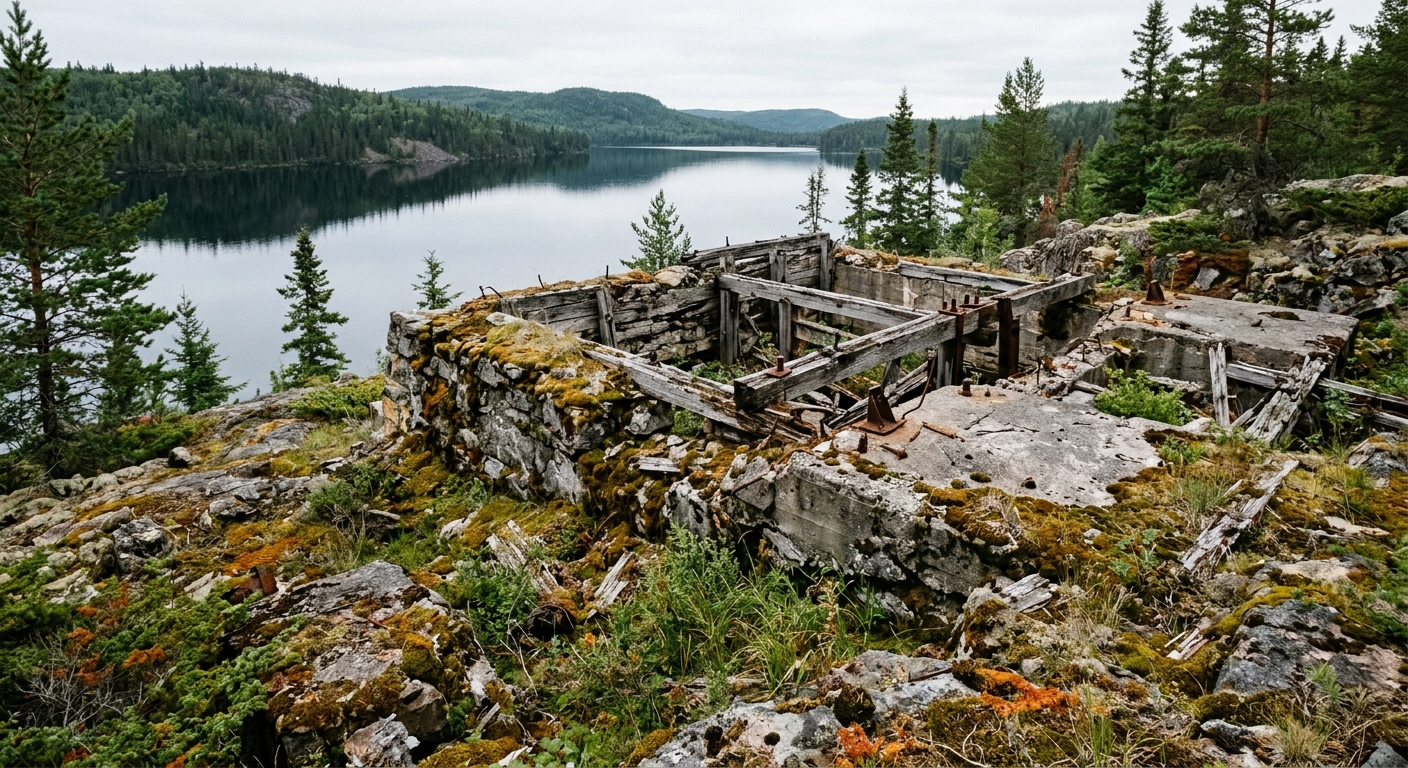
AI-generated illustration; not a photograph of the reported event.
- calendar_today November 9, 2026
Community Concerns Over Historic Rayrock Uranium Mine
Residents of Behchokǫ̀ in the Northwest Territories are voicing renewed concerns about the long-term health impacts of the Rayrock uranium mine. Located north of Behchokǫ̀ and Whatì on Tłı̨chǫ lands, the mine was active from 1957 to 1959 and has since left a troubling legacy of contamination, including dangerous substances such as arsenic.
Timeline of Remediation Efforts
Rayrock sat largely untreated for decades—remediation work began only in 1996, with a further assessment determining in 2017 that more cleanup was necessary. New remediation efforts started in 2024 and are scheduled to continue through 2029. Given its designation as a nuclear waste site, the federal government plans to monitor Rayrock indefinitely. The cleanup project is managed by Crown-Indigenous Relations and Northern Affairs Canada (CIRNAC) in partnership with the Tłı̨chǫ government.
Behchokǫ̀ Residents’ Health Concerns
Multiple Behchokǫ̀ residents, including Marcellin Zoe and J.P. Rabesca, recall living or spending considerable time at the mine site and worry that lingering toxins have affected their health. Both men believe that community members are not being adequately informed about the potential impact of exposures to substances like arsenic and uranium. Rabesca, whose cancer diagnosis followed years after his exposure, remembers workers bringing contaminated clothing home, raising concerns about the extent of community exposure. "There was no safety," he said, describing the conditions when his father worked at Rayrock.
Zoe, also a former resident of the site, worries that toxins could have spread through local water systems and wildlife. "It doesn’t stay in one spot," he said, emphasizing that not enough public information has been made available about the risks or ongoing cleanup efforts. He called for an independent scientific investigation into health impacts from the mine.
Community and Political Response
Jane Weyallon Armstrong, MLA for Monfwi and representative of all four Tłı̨chǫ communities, echoed these community concerns in the Legislative Assembly. Armstrong highlighted personal connections to the site and described how Tłı̨chǫ citizens, including herself, would pass contaminated lakes under warning from elders. She pressed for more research into local cancer rates, noting, "A lot of our people are passing on, being diagnosed with cancer." Armstrong cited a lack of modern diagnostic equipment, such as an MRI machine, at the regional hospital as a barrier to effective cancer screening and tracking.
Official Responses and Federal Testing
The N.W.T. Department of Health responded to inquiries with data covering 2013 to 2022, comparing cancer rates in the region with territorial and national statistics. The department stated there were no detected clusters of unusual or rare cancers warranting further environmental investigation, adding that many factors influence cancer rates, including lifestyle and screening levels. The region’s cancer screening rates reportedly fall below national targets.
CIRNAC, who declined an interview but responded by email, stated that water in the Rayrock area has been extensively sampled over the past 30 years. Aside from Mill Lake—currently under cleanup—other water bodies were not found to be a risk to humans or the environment. A 2018 health assessment confirmed dangerous chemicals like arsenic were present, though amounts were reportedly too low to affect individuals spending less than 90 days per year there. The report stated that toxins from local water bodies were not migrating into important water supplies like Marian River.
Tłı̨chǫ Government Involvement and Next Steps
The Tłı̨chǫ government, in a statement, affirmed that community concerns are valid and should be taken seriously, acknowledging Rayrock’s legacy as a "painful part of Tłı̨chǫ history." The government collaborates with CIRNAC on remediation and monitoring, noting annual inspections by radiation specialists and that "water downstream from the mine is generally clean and safe for people, fish and wildlife, as per applicable guidelines." It maintains annual public meetings on the cleanup in Behchokǫ̀ and plans to expand these to other Tłı̨chǫ communities.
Despite assurances, residents and leaders emphasize the need for greater transparency and further scientific investigation into the Rayrock mine’s impact on community health and the environment.
Source: cbc.ca.


