- calendar_today August 26, 2025
Why Dow Jones Futures Matter to Northern Canada
While Northern Canada—comprising Yukon, Northwest Territories, and Nunavut—is geographically and economically distinct, the region remains tied to global markets through mining exports, energy exploration, and public investment. Dow Jones Futures, which reflect investor sentiment toward global risk and U.S. economic direction, offer valuable insight into trends that directly or indirectly shape Northern Canada’s development trajectory in 2025.
Economic Outlook for the North in 2025
Northern Canada is expected to maintain modest growth in 2025, primarily driven by natural resource projects, infrastructure development, and government funding. However, logistical challenges, high inflation in remote communities, and climate-related disruptions persist.
- Regional GDP growth is projected at 1.4% to 1.8%, fueled by mineral extraction and federal infrastructure commitments.
- Inflation remains high in remote areas, often exceeding 4%, due to shipping costs, supply limitations, and energy expenses.
- Population trends are stable, with urban centers like Whitehorse and Yellowknife continuing to serve as administrative and logistics hubs.
U.S. Federal Reserve Policy and Local Implications
Although the Federal Reserve operates independently of Canadian institutions, its policy decisions—especially on interest rates and inflation—shape the financial environment Northern Canada operates within, particularly for investment and trade.
- The Fed Funds Rate sits at 4.25%–4.50%, with expectations of a potential cut by fall 2025.
- If mirrored by the Bank of Canada, reduced interest rates could ease financing for large-scale mining and infrastructure initiatives in the North.
- Exchange rate changes influenced by Fed decisions may affect equipment imports and the competitiveness of Canadian mining exports.
Global Trade Disruptions Reach the North
Dow Jones Futures often react to geopolitical risk and global trade realignments, which, in turn, affect Northern Canada’s resource-based economy. The region relies heavily on international markets for mineral exports and specialized machinery imports.
- New U.S. tariffs on Chinese and Brazilian imports, introduced in July 2025, have redirected global commodity flows—impacting demand for Canadian minerals like gold, nickel, and rare earth elements.
- China’s economic slowdown has curtailed demand for base metals, slowing new mine investments in Nunavut and the Northwest Territories.
- Rising energy costs, exacerbated by Middle East tensions, are inflating the already high costs of operating in the remote Arctic.
Key Sectors: Mining, Energy, and Infrastructure
Northern Canada’s economy revolves around a few high-impact industries—each affected differently by global market sentiment and capital availability.
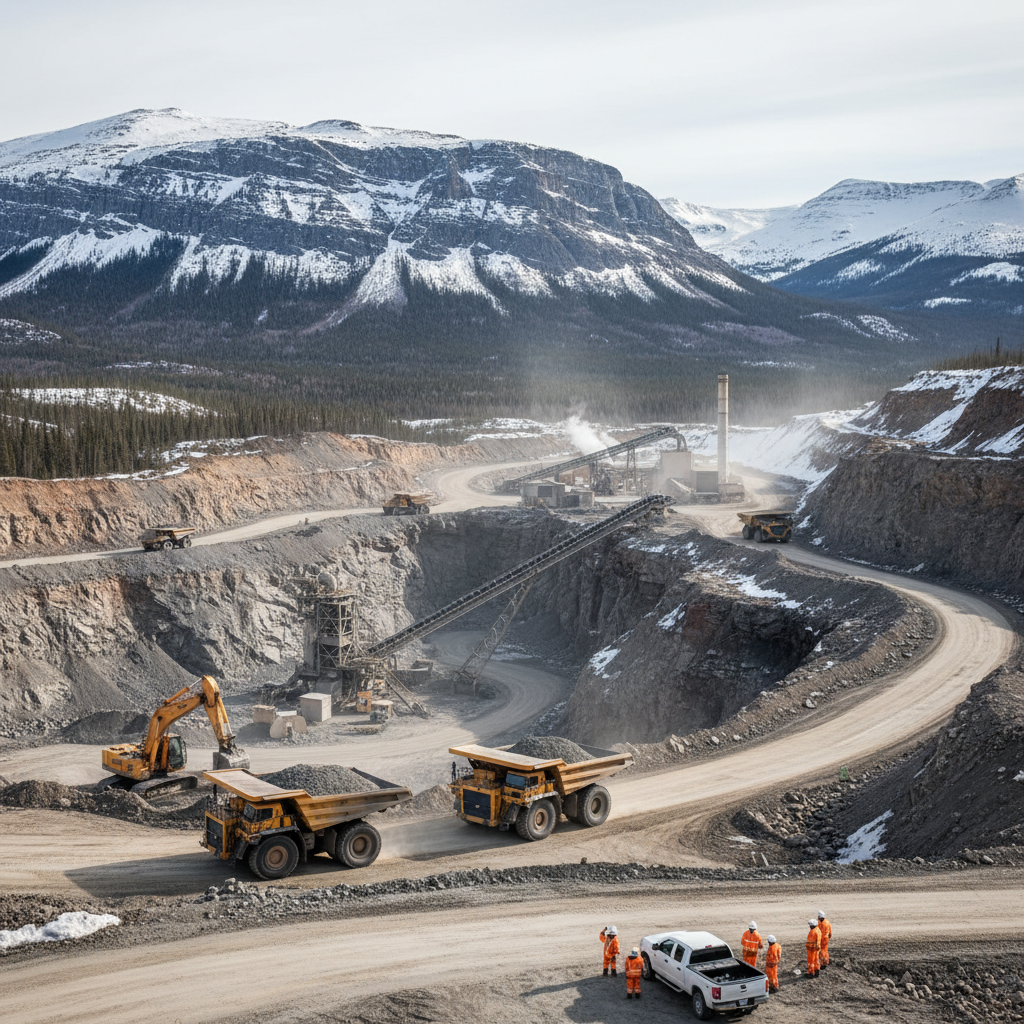
- Mining remains the cornerstone of the region’s private-sector economy. Exploration is steady, but project financing is vulnerable to global commodity cycles and investor caution.
- Energy development, including hydro and small-scale LNG, is gradually expanding in remote communities—especially where diesel dependence is costly and environmentally unsustainable.
- Infrastructure investment, such as all-season roads, broadband expansion, and airport upgrades, is largely funded by federal programs but is sensitive to inflation and supply chain delays.
Investor Sentiment in the North: Public-Led and Cautious
Unlike financial centers, investor sentiment in Northern Canada is heavily shaped by public policy, long timelines, and environmental and Indigenous considerations. Yet Dow Jones Futures help signal how global capital might flow—and where risk appetite is shifting.
- The U.S. AAII Investor Sentiment Survey indicates cautious optimism around 45%, with similar attitudes found among developers and public-private partnerships operating in the North.
- Investment decisions are grounded in long-term planning, with particular focus on climate resilience, Indigenous equity partnerships, and sustainable development.
- Capital allocation favors essential sectors—mining, logistics, and community energy—over consumer-driven industries.
7 Key Dow Futures Insights Relevant to Northern Canada in 2025
As Northern Canada’s investors position for the rest of the year, these predictive insights will shape how portfolios respond to evolving market conditions. Futures traders across the region should be ready for continued shifts.
- Volatility in global markets, especially around trade or energy, may delay project approvals or trigger cost revisions.
- A potential Fed rate cut could ease borrowing conditions, aiding infrastructure expansion and exploration.
- Tariff-driven inflation affects construction inputs, transportation costs, and procurement for remote communities.
- Mining and energy sectors will continue to drive investment, while tourism and retail remain underdeveloped.
- A stronger Canadian dollar—if driven by U.S. policy—may reduce export competitiveness of Northern commodities.
- Labor market gaps, particularly in skilled trades and engineering, will require sustained recruitment and training.
- Investor interest in ESG-focused projects may rise, especially those involving Indigenous governance and environmental responsibility.
Investment Considerations for Northern Stakeholders
In 2025, investors, developers, and policymakers in Northern Canada must navigate unique economic conditions shaped by climate, geography, and infrastructure limitations. Aligning with global market signals while focusing on long-term, sustainable growth is essential.
- Prioritize investments in mineral exploration, clean energy, and transportation logistics.
- Use Dow Jones Futures as a macro guide for anticipating capital flow and sector momentum.
- Continue leveraging partnerships with Indigenous communities to ensure equitable, resilient development.
Northern Canada’s Outlook: Remote, Resource-Rich, and Globally Linked
Northern Canada’s economy remains defined by its geography but increasingly influenced by global finance and trade. Dow Jones Futures, while not locally generated, offer an important perspective on the international dynamics that will shape the region’s future. With a focus on sustainability, resilience, and responsible investment, Northern Canada has the opportunity to thrive in 2025—provided it stays attuned to the broader forces at play.