- calendar_today August 20, 2025
.
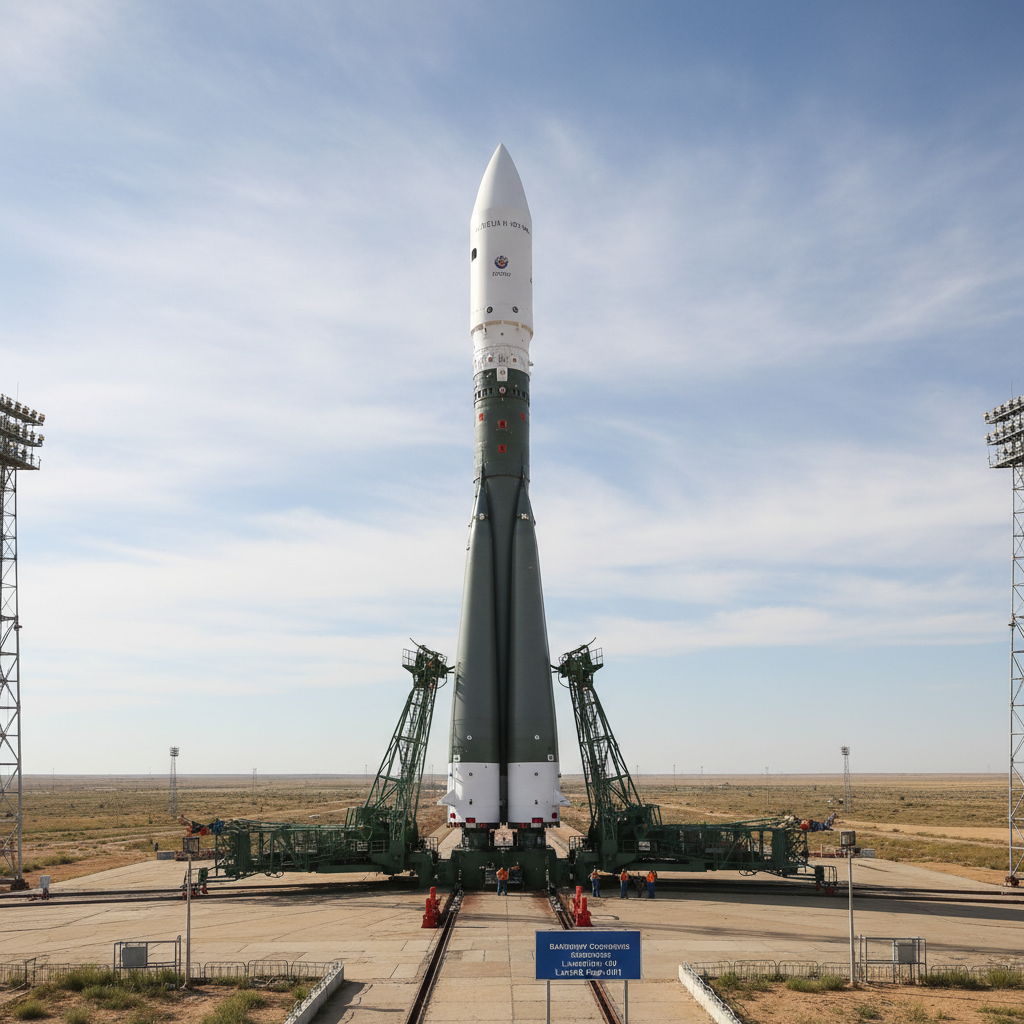
Russia plans to roll out its next-generation Soyuz-5 rocket before the end of this year. Dmitry Bakanov, the director of state space corporation Roscosmos, confirmed the upcoming launch in an interview with state media outlet TASS.
“Yes, we are planning for December,” Bakanov told the news outlet. Preparations for the first liftoff are “almost ready,” the head of Roscosmos added. The flight will take place from the Baikonur cosmodrome in Kazakhstan. The launch would mark the debut of a vehicle that has been in development for more than ten years. Roscosmos plans several tests before declaring the rocket operational, but it does not expect full service until 2028.
As its name suggests, Soyuz-5 is not entirely new. In fact, its design has many parallels with the Zenit-2 rocket. That launcher has a history that stretches back to the 1980s. Ukrainian state enterprise Yuzhnoye Design Bureau first developed Zenit for Soviet military and space programs. Rockets were built in Ukraine, but they used Russian RD-171 engines. Zenit became one of the few examples of post-Soviet collaboration in spaceflight, especially in the engine business. Russia has been known to use Ukrainian products for this purpose, too. Russia’s invasion of Ukraine in 2022 put an end to that cooperation. In December 2023, Russian forces struck the plant in Ukraine where Zenit rockets had once been assembled.
In many ways, Soyuz-5 is a bigger and homegrown version of Zenit. It measures 53 meters (174 feet) long and is assembled in Russia. This gives Roscosmos access to a rocket formerly built in Ukraine. According to Bakanov, that transition “represents a strategic victory” for Russia. The country has ended its reliance on foreign technologies and manufacturing while also phasing out its aging Proton-M launcher at the same time.
Past With a Vision for the Future
Technically, Soyuz-5 would be considered a medium-lift rocket. It can deliver around 17 metric tons to low-Earth orbit, which is possible thanks to propellant tanks that are slightly larger than Zenit’s. The RD-171MV powers the rocket’s main engine. It is the newest of a family of engines with roots in the Soviet space program.
More specifically, the RD-171MV traces its origins to the Energia program of the 1980s. Energia helped power the Soviet Union’s short-lived space shuttle, Buran, among other applications. The newest iteration, RD-171MV, has one key difference: it contains no Ukrainian-made parts. Powered by kerosene and liquid oxygen, RD-171MV produces more than three times the thrust of NASA’s Space Shuttle main engine, making it the most powerful liquid-fueled rocket engine in use today.
In other respects, however, Soyuz-5 represents a step backward. The rocket is expendable, at least in its current design. In contrast, its Western and Chinese competitors—many of which were developed over the last two decades—favor reusability. That matters because SpaceX and others have an upper hand in the international launch market. Clients expect competitive prices from future contracts, and reusable rockets give Western and Chinese launch providers that flexibility.
This is not to say that Soyuz-5 is unimportant. For Roscosmos, the vehicle represents a key link between the past and an as-yet-unknown future. For the past decade, it has been developing a reusable rocket to replace its older, expendable launch vehicles. Amur, also known as Soyuz-7, has a design that’s based on a reusable first stage and methane-fueled engines. Over time, it could be competitive with SpaceX in terms of price. But development of Amur has suffered a series of delays, and it is now not expected to fly before 2030 at the earliest.
This has left Roscosmos in something of a pickle. With the funds for space technology limited by the war and international sanctions, it has not been able to develop an entirely new and reusable rocket. Soyuz-5 is a patch to cover that gap. It does not move Russia into the future. Instead, it keeps its space program afloat with a vehicle that is very much rooted in the Soviet past.
However, it remains to be seen whether Soyuz-5 can find a role in the commercial launch market. The situation there has changed considerably in the past ten years, as new entrants like SpaceX and Chinese providers have emerged. They offer cheaper and more flexible services than Russia can currently provide. The country still runs crewed Soyuz-2 flights and Angara rockets for heavier payloads, but neither has found a strong foothold internationally. It is an open question if Soyuz-5 can change that.
Nonetheless, the fact that Roscosmos has brought Soyuz-5 so close to launch at all, under the difficult circumstances, is a success. A smooth flight in December would show that, sanctions and reduced budgets notwithstanding, Russia is still capable of rolling out new hardware. Soyuz-5 may not bring a revolution in rocket design. For Russia, it is more than that: the vehicle is a step toward greater independence from foreign technologies. It is a bridge to a future that has yet to arrive, whether that comes with Amur or the next generation of Russian rockets that may still be on the drawing board.