- calendar_today August 18, 2025
Northern Canada’s Role in North American Soccer’s World Surge
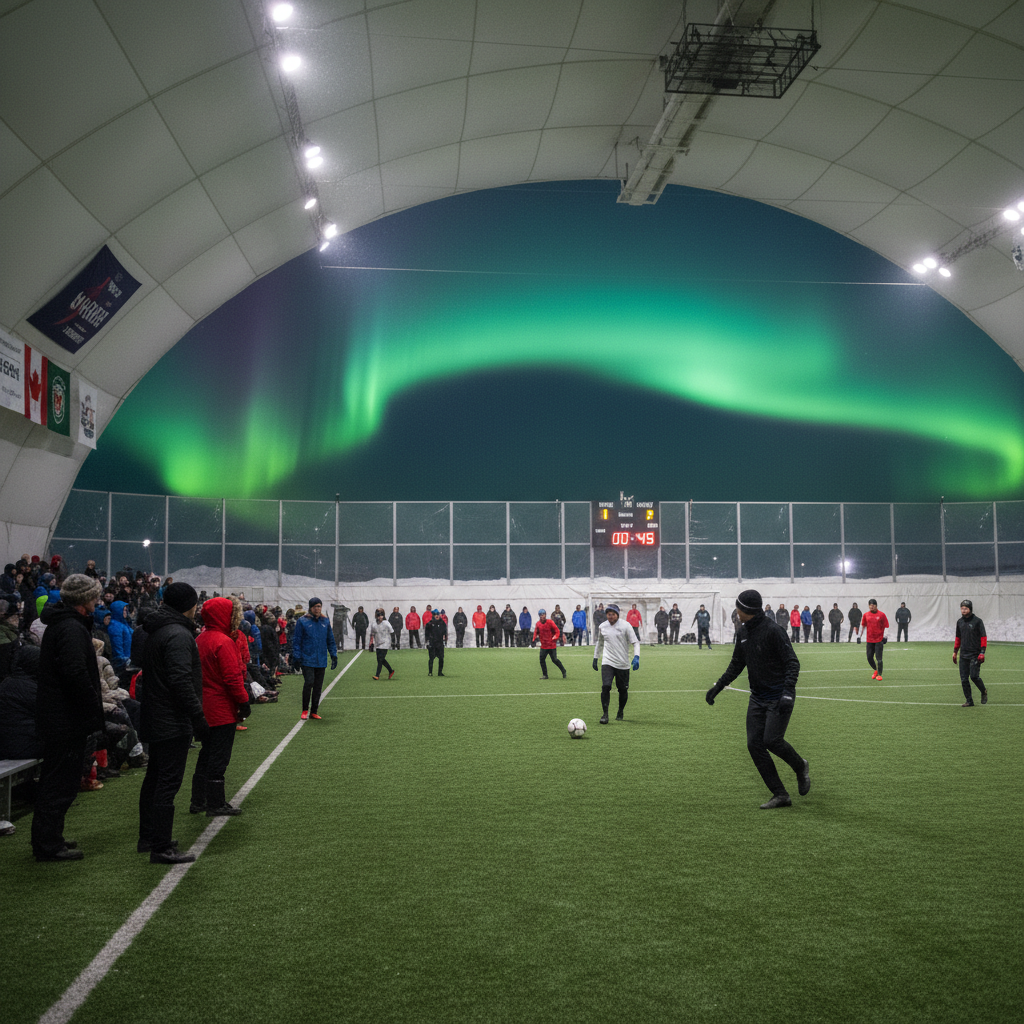
The last true frontier ignites with unexpected fire. Whitehorse’s indoor complex trembles as Arctic Edge supporters – bundled against bone-shattering cold that would paralyze southern souls – unleash a thunderous roar that reverberates beneath Northern Lights painting the sky in nature’s most spectacular light show. Their voices claim territory once surrendered without question to hockey sticks and dog sleds, soccer passion burning hotter than wood stoves fighting minus-forty nights.
“TRUE NORTH STRONG!” The declaration shatters arctic silence as drums pound rhythm matching racing hearts of people who’ve conquered conditions outsiders flee. Spring 2025 finds Northern Canada – where environmental extremes traditionally defined sporting limitations – transformed into soccer’s most unexpected laboratory, forging frost-tough technical wizards combining survival instincts with surprising skill that leaves European scouts slack-jawed in disbelief.
“Northern soccer redefines toughness entirely,” declares Yellowknife United captain Sarah Koe, frost forming on eyelashes moments after stepping from heated field house. “We’ve built something southern observers can’t comprehend – development system thriving where nothing should grow. They mock our isolation until they witness players maintaining perfect technique despite conditions that would shut down Premier League for months, who develop unmatched problem-solving abilities because standard approaches become impossible through darkness-dominated winters.”
From Whitehorse’s mountain valley to Yellowknife’s Great Slave shores, Iqaluit’s Baffin Island outpost to Inuvik’s Arctic Ocean proximity, Northern Canada has forged distinctive soccer identity merging Indigenous resilience with frontier innovation. Indoor facilities become year-round crucibles where technical development continues through months when outdoor pitches disappear beneath snowdrifts measured in meters rather than centimeters.
Youth development tells the North’s most remarkable story. Academies have flourished despite extreme isolation, their methodology embracing environmental challenges as developmental advantages. When Yukon’s Olympic Development Program began producing technically sophisticated players with unmistakable mental fortitude – problem-solving abilities honed through challenges southern players couldn’t imagine – international scouts found themselves making astonished pilgrimages to territory once considered utterly beyond soccer’s frontier.
“These Northern players possess qualities I’ve never encountered,” notes Icelandic scout Magnus Eriksen during Yellowknife showcase, his homeland’s winter experience proving woefully inadequate preparation for true Northern conditions. “They combine technical ability with psychological resilience that defies explanation. They’ve learned through necessity to adapt instantly to the impossible – today they trained in minus-thirty without complaint. European directors increasingly recognize Northern Canada produces players with mental advantages impossible to replicate anywhere else on earth.”
The pipeline from frontier pitches to professional ranks emerges steadily. When Whitehorse-raised goalkeeper Jason Tizya signed with Norwegian side Bodø/Glimt for $2 million – his development occurring entirely within Northern Canada’s challenging ecosystem – the entire community gathered in celebration merging soccer passion with frontier pride, traditional country foods and northern hospitality providing backdrop to breakthrough moment attracting global attention.
Cultural transformation sweeps across territories. In Iqaluit community centers once dominated by traditional Arctic sports, residents now host viewing parties where tactical analysis reaches sophistication that surprises southern visitors. In remote northern settlements where weekend activities once revolved entirely around survival skills and indoor sports, youth soccer participation has surged 41% since 2023.
As the 2026 World Cup approaches – with nearby cities hosting matches that will draw Northern travelers on epic journeys – these territories stand as ultimate evidence of soccer’s North American revolution. This ultimate frontier hasn’t merely accepted soccer; it has reinvented it through Arctic innovation, enhancing the global game through adaptations forged in Earth’s most challenging conditions.