- calendar_today August 12, 2025
Buying a home in Northern Canada has always been a distinctive experience—one shaped by isolation, limited listings, harsh climate conditions, and deep-rooted community ties. In 2025, that experience is undergoing a digital evolution. Artificial intelligence is no longer just a buzzword in real estate; it’s now a critical tool for navigating housing markets in the Yukon, Northwest Territories (NWT), and Nunavut.
Where traditional real estate models struggle to keep up with the region’s vast geography and patchy data infrastructure, AI is stepping in with tools that offer precision, speed, and context. From forecasting permafrost impact on foundations to helping buyers understand energy efficiency in off-grid homes, artificial intelligence is bringing transparency and accessibility to one of Canada’s most complex housing frontiers.
Mapping the Unmapped: AI and Property Discovery
In much of Northern Canada, standard real estate platforms have historically lacked the granularity needed to reflect local market dynamics. Listings are sparse, mapping tools often inaccurate, and travel to view homes can involve flights or winter roads.
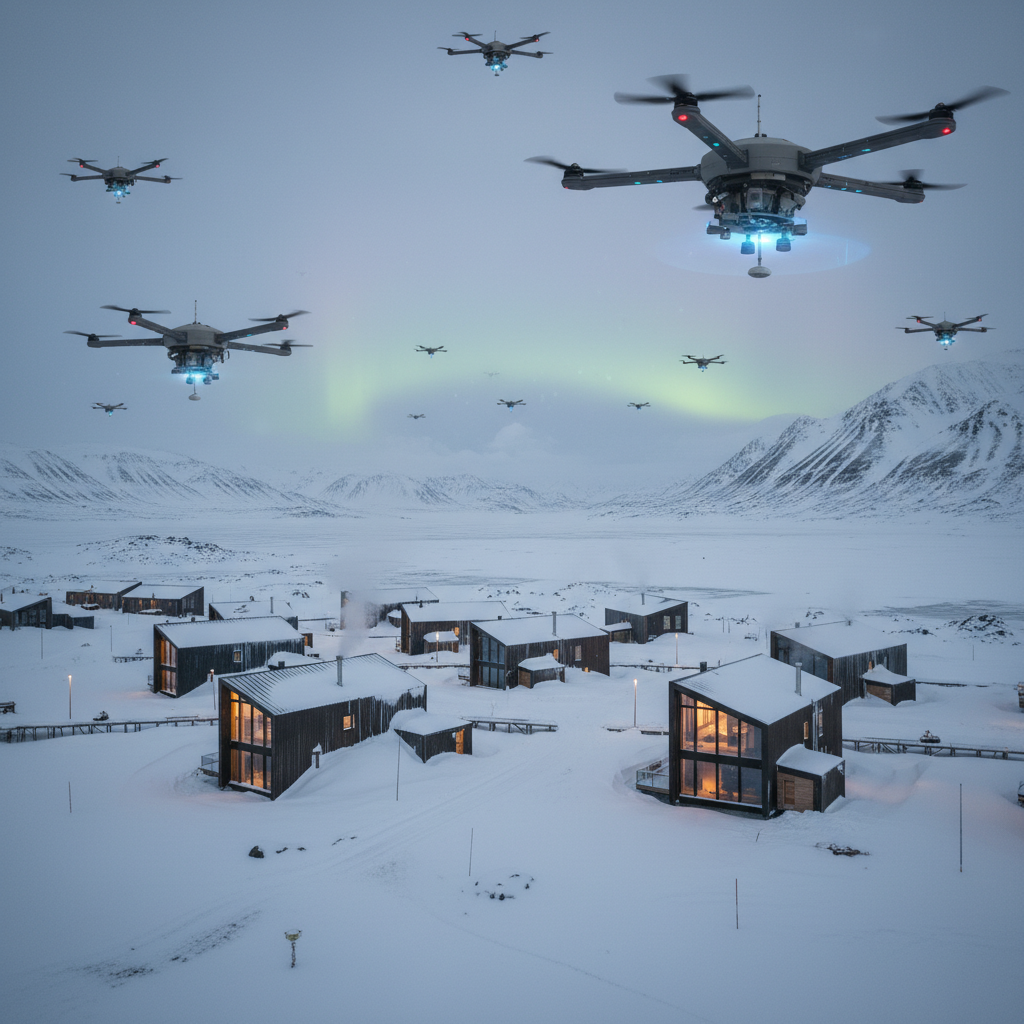
AI is now helping to overcome these limitations. Using satellite imagery, drone footage, and municipal data overlays, AI-powered platforms can generate up-to-date, accurate property maps—even in communities that lack official road grids or digitized land records. For buyers exploring homes in Iqaluit or Fort Smith, these systems provide not only listings, but also contextual data on topography, solar exposure, and seasonal accessibility.
Moreover, AI can flag nearby infrastructure—such as schools, health centers, and water delivery systems—crucial information in remote settings where basic services vary from one block to the next.
Real-Time Market Intelligence in Low-Volume Regions
One of the biggest challenges for buyers and agents in Northern Canada has been pricing homes accurately. With relatively few transactions in any given year, traditional comparable sales data is thin.
In 2025, AI is helping to fill that gap by analyzing broader regional trends and correlating them with hyperlocal indicators such as build quality, insulation standards, water source types, and heating systems. For example, a log cabin near Dawson City with an upgraded solar array may be priced differently than a similar property without off-grid capabilities—even if both sold years ago.
AI also assists buyers in identifying “quiet” trends: the early signs of new mining projects, regional development grants, or road upgrades that could shift property values in the years ahead.
Energy Efficiency and Utility Cost Predictions
Homes in Northern Canada face extreme temperature swings, fuel delivery challenges, and high energy costs. AI tools are now being used to analyze a property’s energy profile—factoring in insulation quality, heating source, roof condition, and air leakage.
Buyers in Inuvik or Whitehorse can now receive AI-generated forecasts showing how much it might cost to heat a home in January, or what upgrades would pay off the fastest in terms of energy savings. These systems draw from weather models, past utility data, and home inspection reports to offer buyers a clearer view of their future expenses.
With governments in the North increasingly focused on energy-efficient retrofits and clean energy adoption, AI is also identifying homes that qualify for rebates, grants, or special financing programs.
Climate Risk Assessment: Permafrost, Flooding, and Erosion
Climate change is having a profound impact on Northern housing, particularly through the thawing of permafrost, rising sea levels, and unpredictable seasonal transitions.
AI tools are now used to assess environmental risk on a property-by-property basis. Buyers looking at homes in Tuktoyaktuk or Rankin Inlet can access digital models showing the likelihood of foundation shifting due to permafrost degradation, as well as future flood risks based on sea level rise projections.
Some real estate agents in Yellowknife and Iqaluit are already integrating these AI-powered climate reports into standard property packages, offering a level of foresight that was previously unavailable in the market.
Language and Accessibility Tools for Indigenous Communities
Northern Canada is home to many Indigenous communities, where homeownership must align with traditional land rights, language preferences, and cultural priorities.
AI translation tools are making real estate documents more accessible in Indigenous languages such as Inuktitut, Dene, and Gwich’in. Some platforms now offer guided property walkthroughs and mortgage explanations in local languages—an important development for Inuit elders or newcomers who may not be fluent in English or French.
Additionally, AI is being used to cross-reference listings with land claim agreements and local development rules, helping Indigenous buyers and band councils navigate the complex interplay between federal, territorial, and traditional ownership structures.
Streamlining Legal and Financial Hurdles
The legal side of buying a home in the North can be slow-moving and opaque. Paper-based land titles, missing surveys, or unclear zoning can delay purchases for months.
AI is making this process more efficient by scanning historical deeds, flagging inconsistencies in title records, and suggesting routes to resolution. In Yukon, where many rural properties still rely on hand-drawn land descriptions, AI systems trained on topographic and registry data can assist legal teams in preparing cleaner, digitized records.
On the financing side, lenders are using AI to assess creditworthiness using alternative metrics. For workers in seasonal industries or cash-based economies, AI can look at employment history, housing stability, and local economic indicators—providing a more equitable picture than traditional credit scores alone.
AI-Assisted Virtual Buying: A Growing Trend in 2025
With distances spanning hundreds or even thousands of kilometers between buyers and properties, virtual homebuying is increasingly common in Northern Canada. AI-enhanced 3D tours, voice-guided walkthroughs, and augmented reality overlays allow prospective buyers to “visit” homes from Ottawa or Vancouver before flying north.
AI also powers chatbot assistants that guide buyers through the entire process—answering questions about property taxes in Kugluktuk, building code requirements in Watson Lake, or the logistics of oil delivery in remote Nunavut.
For many younger buyers and professionals relocating for work, these tools offer the confidence to make decisions quickly and remotely—without sacrificing due diligence.
AI and Housing Development in the North
Northern Canada faces a persistent housing shortage, particularly in Indigenous communities and fast-growing territorial capitals. AI is increasingly being used in planning and construction efforts.
Territorial governments and housing authorities are using AI to identify ideal building sites, assess materials suited for Arctic conditions, and model population growth to inform future housing needs. AI is also helping to optimize logistics—identifying the best times to deliver materials via ice roads or barges, reducing construction delays and costs.
In collaboration with local knowledge holders, AI tools are guiding efforts to design culturally appropriate, energy-efficient homes that reflect the values and realities of life in the North.
Bridging Isolation with Insight
In 2025, artificial intelligence is not just a tech trend in Northern Canada—it’s a necessary solution to real-world challenges. From mapping the unmapped to helping families make smart, sustainable decisions in one of the planet’s most demanding environments, AI is reshaping what it means to buy a home in the North.
For a region long defined by its remoteness and resilience, AI offers something transformative: the power to connect, inform, and guide—without losing the deeply human dimension of home.