
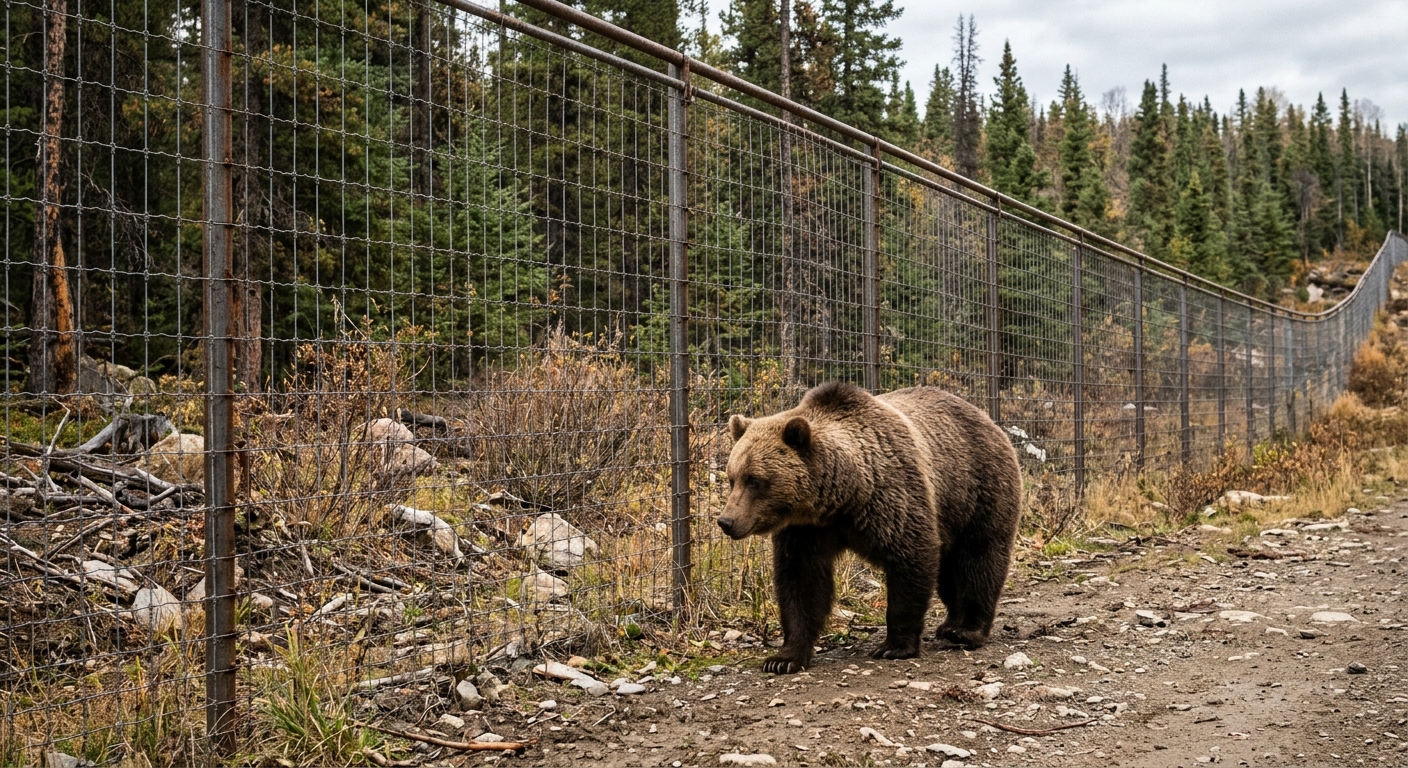
AI-generated illustration; not a photograph of the reported event.
- calendar_today November 9, 2026
Dozens of Grizzly Bears Killed After Landfill Fencing in Inuvik
This past summer, more than 28 grizzly bears were shot in Inuvik after the community installed an electric fence around its landfill. The fence, constructed at a cost of nearly one million dollars with the help of federal funding, was intended to prevent bears from accessing human garbage—a food source that numerous bears had relied on for generations. Following the fence’s installation, most of the bears that had frequented the dumpsite either perished or were killed, with only a few remaining whose odds of survival are considered low.
Longstanding Bear Habituation at the Landfill
Grizzly bears have been documented visiting the Inuvik landfill for decades, with multi-generational habituation to the site as a regular food source. As of 2025, trail cameras installed by the Department of Environment and Climate Change in the Northwest Territories recorded up to 3,936 bear detections in a single season, including moments where as many as 13 bears could be seen together. DNA analysis confirmed that upwards of 40 individual bears were consistently using the dumpsite.
Community Concerns and Safety Measures
The fencing project was undertaken under the direction of the Gwich'in Land and Water Board and followed models used in other North American landfills, though Inuvik is currently the only community in the Beaufort Delta region with such a structure. According to Inuvik mayor Peter Clarkson, the decision to fence the landfill was met with some anxiety and resistance from residents, with many questioning whether simply letting bears continue to feed on garbage was preferable. Clarkson and wildlife officials argue that doing nothing would have resulted in more hazardous interactions between people and bears.
Why Relocation and Captivity Weren’t Options
While some community members expressed concerns about lethal measures, experts maintain that relocation and captivity are not practical alternatives. Dr. Lana Ciarniello, an independent conservation scientist and co-chair for human-bear conflicts with the International Union for Conservation of Nature, explained that relocating bears in the Northwest Territories would likely push them into the territory of other bears and potentially lead to increased mortality. She also emphasized that Canada does not have enough specialized facilities to house wild bears long-term, and that captivity often leads to poor adaptation and welfare outcomes in wild bears.
Emaciation and Behavior After Fencing
After the electric fence was activated in April, bears were observed circling the landfill, appearing confused, emaciated, and sickly. Toby Halle, a renewable resource officer in Inuvik, reported that some bears had no knowledge of how to survive elsewhere, stating, "They don't know what to do with themselves." Following a failed attempt to relocate a family group, which returned within days, wildlife officers concluded that lethal removal was the only realistic option to address the issue and avoid dangerous encounters.
The Path Forward: Prevention and Bear-Proofing
Experts, including Ciarniello, argue that proactive prevention—such as eliminating open garbage dumps and maintaining effective bear-proof fences—is essential for managing bear populations and avoiding future conflict. She noted, "Bears cannot be feeding on garbage. It is 2026. I mean, it's ridiculous to have open pit dumps anywhere in Canada. They need to be closed." Halle believes bear activity near the dump will remain elevated for several years but should normalize as long as the fence remains effective.
In summary, Inuvik’s difficult summer underscores the complex relationship between wildlife management, human safety, and the unintended consequences of generational bear habituation to unnatural food sources like landfills.
Source: cbc.ca.


